2026-10-03 ·
Preparing Sump Pumps for Detroit's Freeze-Thaw Cycles
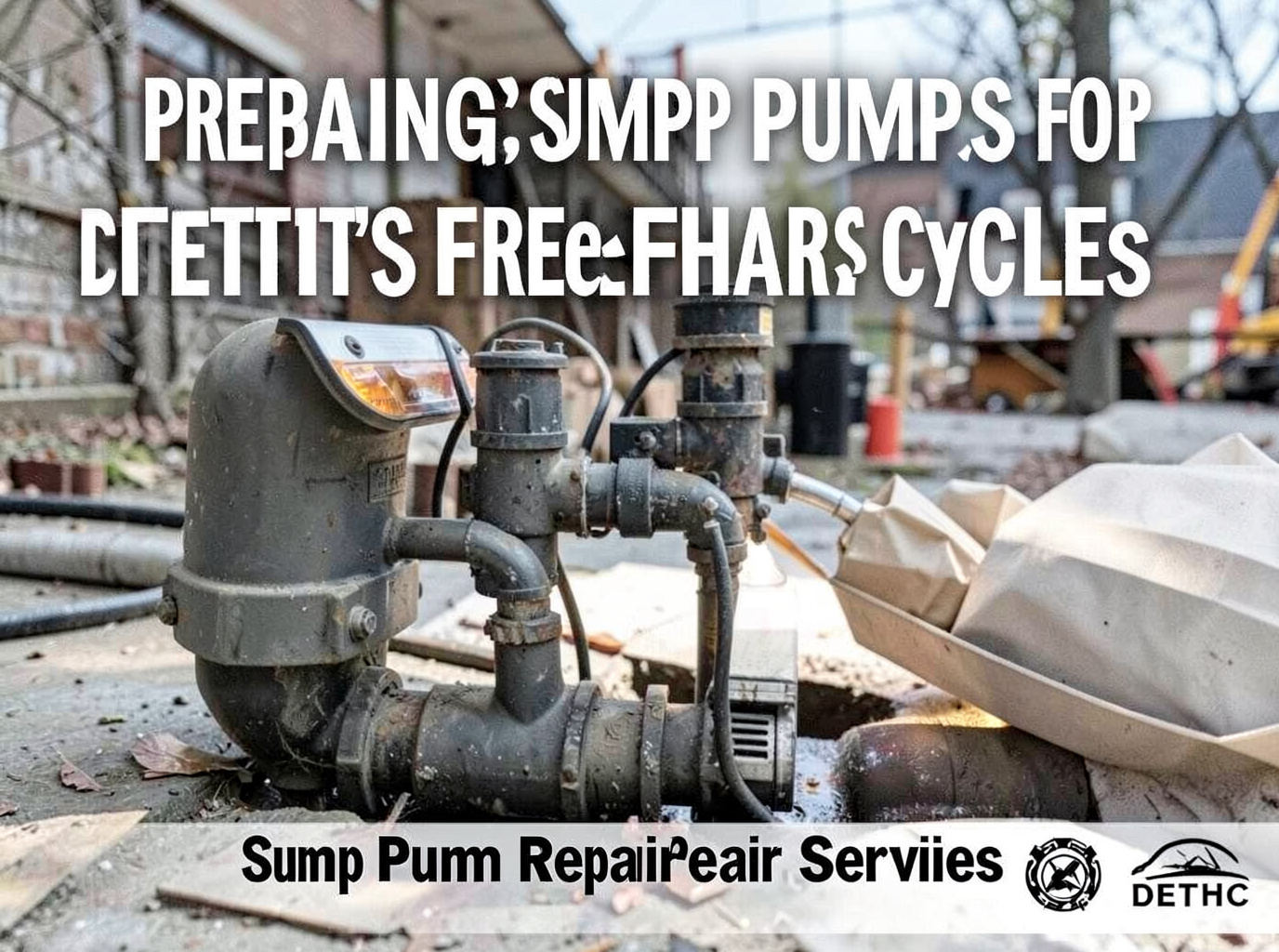
Detroit homeowners face repeated freeze-thaw cycles that can freeze discharge lines and strain sump pump systems when overnight lows drop below 32°F after daytime thaws. Start by verifying the discharge pipe slopes away from the foundation at least 1 inch per foot and remains clear of debris before the first hard freeze hits Wayne County. Adding insulation sleeves around exposed sections prevents ice blockages that send water back into the pit during sudden warm-ups.
How Freeze-Thaw Cycles Affect Sump Pumps in Detroit
Detroit's four distinct seasons bring cold snowy winters that alternate with brief thaws, creating ideal conditions for ice dams in discharge pipes. Older housing stock in areas such as Boston-Edison and Indian Village often features shallow foundations and clay-heavy soils that hold moisture longer, increasing the volume of water the sump pump must handle after each thaw. In Corktown and Mexicantown, combined sewer systems can back up when surface water cannot drain quickly enough, forcing sump pumps to work harder during these transitions. Battery backup units become essential because power outages frequently accompany winter storms, and a standard 12-volt system can run a pump for 6–10 hours depending on cycle frequency. Checking the check valve and float switch before December reduces the chance of a frozen pipe causing basement water damage when temperatures swing 20–30 degrees in a single day.
Winterizing the Discharge Line and Pit
Clear the discharge line of any standing water by running the pump manually in late fall, then install a backflow preventer rated for outdoor use to stop ice from forming inside the pipe. In Palmer Park and Woodbridge homes with long horizontal runs, adding a 1-inch foam sleeve keeps the line above freezing even when snow piles against the foundation. Clean the sump pit of sediment that accumulates from Wayne County clay soils so the float switch operates freely once spring runoff begins. Homeowners near Eastern Market or Midtown often route discharge into a French drain rather than the street to avoid city fines during heavy melts. These steps tie directly into a full Sump Pump Winterization service that addresses the exact conditions created by Detroit's climate swings.
Battery Backup and Power Reliability
Power outages during ice storms leave many Detroit homes vulnerable unless a battery backup is tested every six months. A 100-amp-hour marine battery typically provides 8–12 hours of runtime for a 1/3-horsepower pump cycling every three minutes. Place the backup unit on a shelf above the expected flood line in the basement and confirm the charging system maintains 13.2–13.8 volts. Residents in Dearborn and Hamtramck with older electrical panels sometimes need a dedicated 20-amp circuit to avoid tripped breakers when the backup engages. Regular testing reveals weak batteries before the next freeze-thaw event forces the system into emergency mode.
When to Schedule Professional Inspection
If the pump runs more than once every two minutes after a thaw or the discharge line shows frost on the exterior, contact a technician for a full system check. Common Discharge Pipe Problems in Detroit Sump Pump Setups outlines the exact failure points seen in local homes. A Sump Pump Maintenance visit before December includes flow-rate testing and seal inspection that prevents most winter failures. Homes near Campus Martius Park or Belle Isle Park benefit from this proactive approach because lake-effect snow increases meltwater volume each spring. Plumbing Service Detroit LLC, based in Detroit, offers these inspections Monday through Friday 8am–6pm and Saturday 9am–2pm to keep systems ready for the next cycle.