Detroit's housing stock in neighborhoods such as Boston-Edison, Woodbridge, and Indian Village often dates to the early 1900s, with many homes featuring original or early replacement sump pits set in clay-heavy soil that retains water long after storms. This soil type combined with Wayne County's four distinct seasons means inspectors must check for corrosion on older metal basins and verify that discharge lines still clear properly to the street or alley without freezing risks during sudden cold snaps. Homes near the Detroit Institute of Arts or in Palmer Park frequently sit on lots with slight slopes toward basements, so water flow direction during spring thaw becomes a key inspection point.
Winter snow loads followed by rapid warming create heavy meltwater volumes that test float switches and check valves more aggressively than in milder climates. In areas like Corktown and Eastern Market, where many properties have combined sewer connections, inspectors also look for signs of backflow pressure that can force water back into the pit. Battery backup systems need testing under load because power outages during lake-effect snow events are common, and a failed unit leaves the home vulnerable exactly when sump demand peaks.
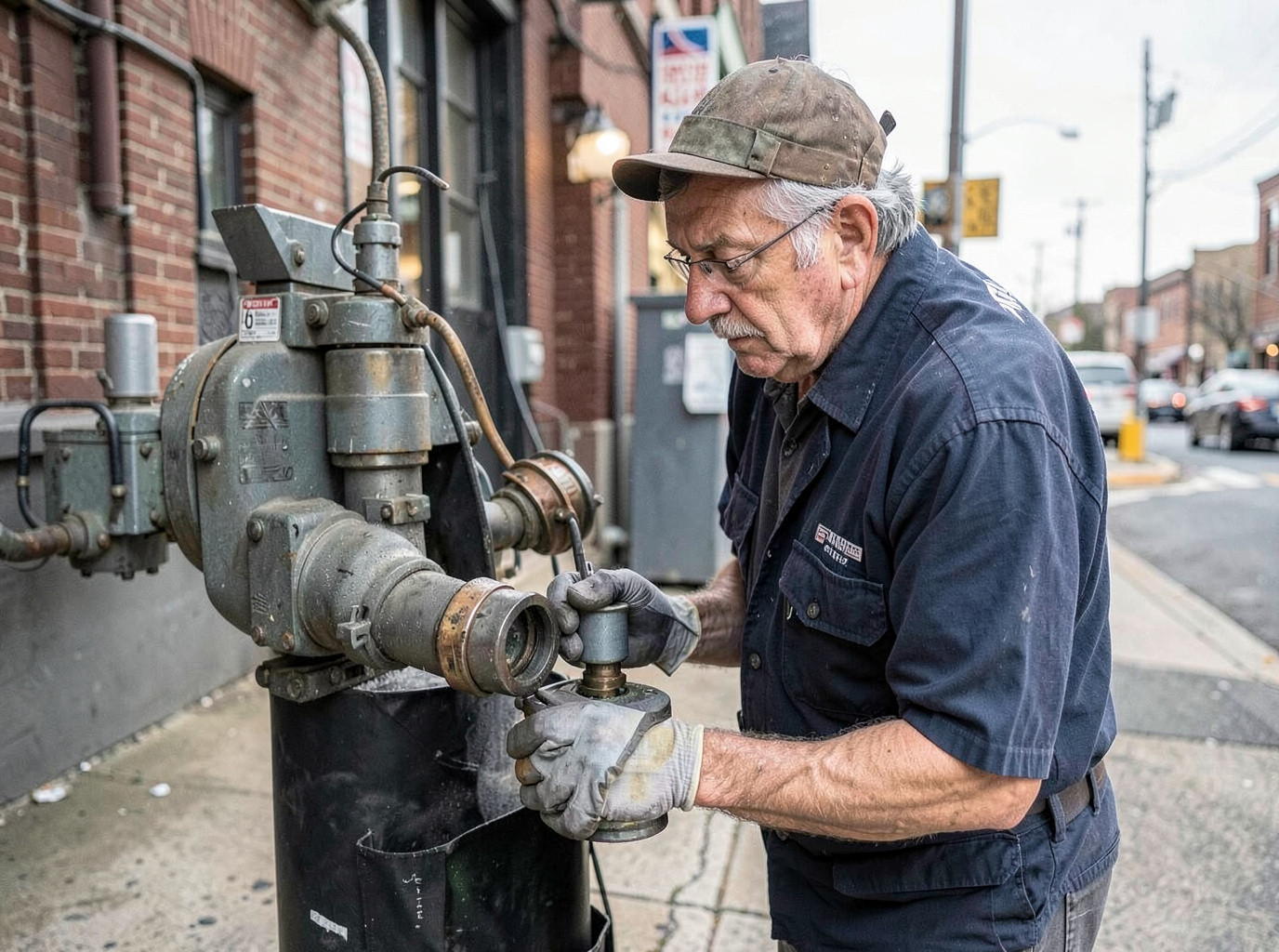
A proper inspection includes confirming the pump model matches the pit depth and that the amperage draw stays within factory specs under simulated water load. Technicians note whether the discharge line runs through unheated crawl spaces or exits above grade where ice can form, a frequent issue in Midtown and Mexicantown row houses. They also check for proper venting to avoid vacuum lock after the pump cycles.
Technician insight
In Detroit, the thing that catches most people out with Sump Pump Inspection is how the heavy clay soil around Indian Village and Palmer Park holds water after snowmelt, forcing pumps to cycle far more often than the switches were designed for and shortening their life in older homes.
Corktown Row House Inspection
Homeowner noticed occasional gurgling after heavy rain. Inspection revealed a partially frozen discharge line exiting above grade and a worn float switch on a 1920s basin. Replaced the switch, cleared and rerouted the line to a frost-free outlet, and confirmed proper cycling before spring thaw.
Sump Pump Inspection Services We Offer
✓Float Switch Testing
Verifies reliable activation and deactivation points so the pump cycles correctly during heavy spring runoff common in Wayne County clay soils.
✓Battery Backup Verification
Tests backup power under load to ensure operation during outages that often accompany Detroit's winter storms and lake-effect snow.
✓Discharge Line Inspection
Checks lines for blockages, improper slope, or freeze points that can occur when lines exit above grade in older Midtown and Corktown homes.
✓Pit and Basin Assessment
Evaluates older concrete or metal pits for cracks and sediment buildup typical in pre-war homes throughout Boston-Edison and Woodbridge.
✓Check Valve and Vent Check
Confirms valves prevent backflow from combined sewers and that vents remain clear, reducing vacuum issues after rapid cycling in wet seasons.
How it works
- 1
Initial Visual Review
Examine the pit, pump model, and discharge routing while noting home age and lot slope in the specific Detroit neighborhood.
- 2
Functional Load Test
Introduce water to cycle the pump and measure amperage, float response, and discharge flow under realistic conditions.
- 3
Backup And Safety Check
Test battery backup, alarm, and check valve performance to confirm protection against power loss and backflow.
- 4
Report And Recommendations
Document findings with photos and note any Detroit-specific concerns such as clay soil effects or freeze risks before leaving the site.
Pricing
Inspections billed by time and complexity with clear quotes provided before work begins.