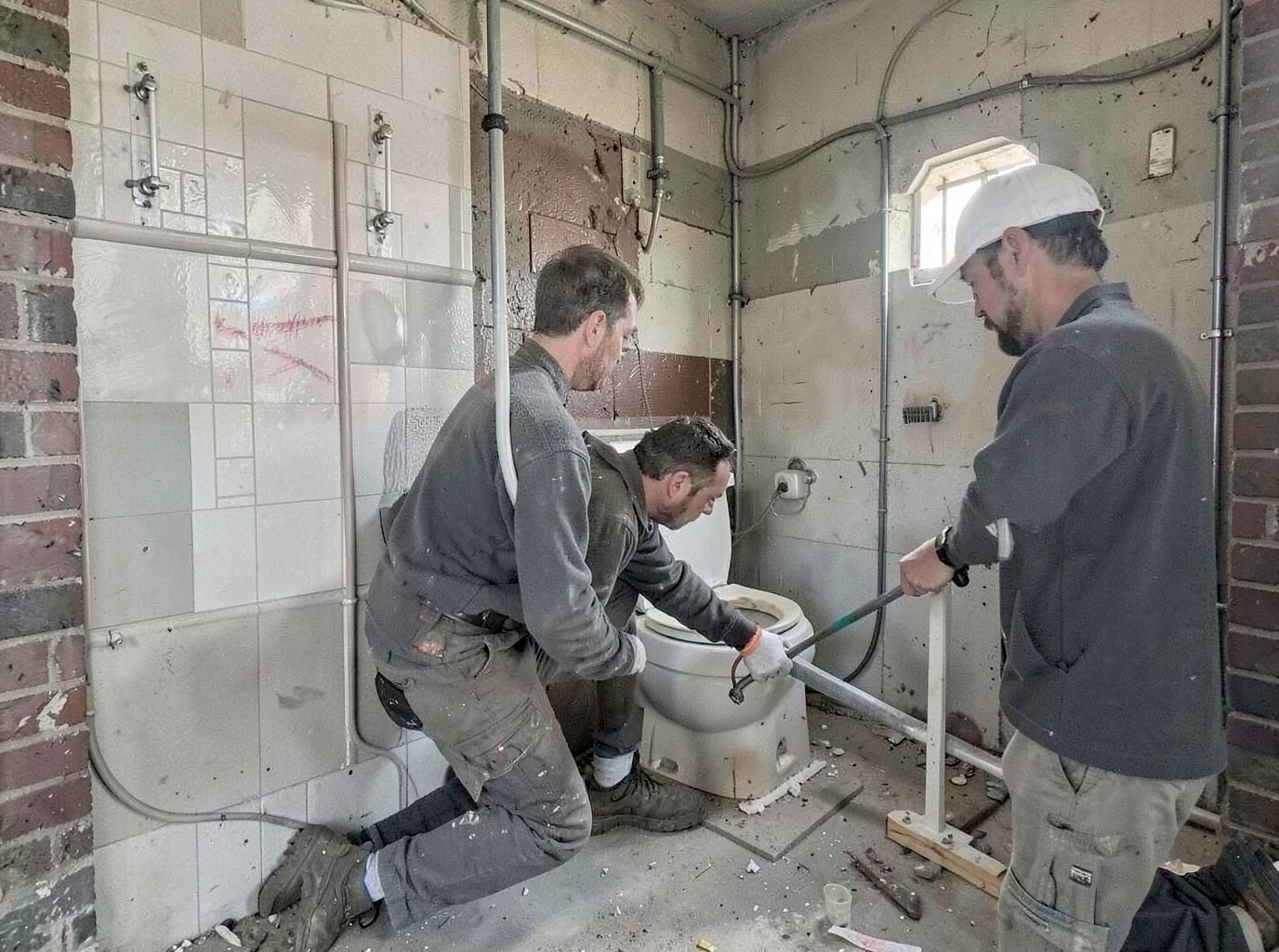
Installing an ADA-compliant toilet in Detroit requires more than picking the right bowl height. Many houses in Boston-Edison, Indian Village and Woodbridge are older with narrower bathrooms and original cast-iron waste stacks; that affects flange position and rough-in options. In Midtown, Eastern Market brownstones and Corktown row houses often need offset flanges or extended wax rings to bridge decades-old subfloor irregularities. We plan for typical Wayne County plumbing runs, sometimes routing to existing cast-iron vents or switching to ABS transitions where the original pipe is inaccessible, and we always discuss whether a raised-height toilet or grab bars will meet the practical needs of the occupant.
Local weather matters: cold, snowy winters and freeze-thaw cycles can make exterior sewer lines and cleanouts brittle, and settling from seasonal frost can tilt bathroom walls or shift floor framing in Mexicantown, Palmer Park, and neighborhoods near Belle Isle Park. For installations where the drain runs under a concrete slab, like some Comerica Park–area condos or homes near Ford Field, we inspect slab conditions and recommend specific flange adapters and seals that tolerate slight movement. We also consider water supply pressure and softening needs in Dearborn-adjacent properties and Hamtramck row homes, since low pressure or mineral buildup changes valve selection for reliable fill cycles.
Code and accessibility notes: an ADA toilet installation must match local dimensional requirements for seat height and clearances, but Wayne County and Detroit inspectors pay particular attention to grab bar locations, door swing, and transfer clearances in older layouts typical of Eastern Market loft conversions. When replacing a 2-piece with a one-piece ADA bowl, anchoring to a compromised subfloor sometimes requires sistering joists or installing a reinforced plywood platform rather than relying on existing tile or plaster subfloors. We advise homeowners about permit needs and coordinate with inspectors when alterations affect structural or fire-block elements.
Edge cases we commonly handle include replacing a 10-inch rough-in in a Boston-Edison home with a 12-inch modern fixture, moving a toilet drain due to a new vanity layout in Woodbridge, and switching to skirted ADA bowls in renovated Midtown bathrooms where wall-hung vanities reduce usable floor space. We also flag odor or sewer gas issues that mimic toilet leaks but originate in damaged cast-iron traps or failed seals under the slab; in those cases we recommend a sewer line camera inspection before committing to a cosmetic replacement. Business hours are Mon–Fri 8am–6pm and Sat 9am–2pm; our shop is based at Detroit and we schedule around seasonal demand peaks.
Technician insight
In Detroit the thing that catches most people out with ADA toilet installs is the old cast-iron flanges and uneven subfloors in prewar homes—especially in Boston-Edison and Woodbridge—where a new bowl will rock unless we repair the joists or install a proper carrier. Also, winter freeze-thaw can hide hairline slab cracks that later show as leaks once the fixture is sealed.
Midtown brownstone: ADA swap revealed sewer obstruction
Problem → A homeowner in Midtown needed a higher toilet for mobility but complained of intermittent backups. What we found → a partially collapsed section of cast-iron under the house causing slow drainage that would have undermined any new ADA fixture. What we did → performed a sewer camera inspection, isolated the bad section, installed a proper transition coupling, repaired the flange and installed the ADA bowl with reinforced subfloor support. Outcome → the toilet drains freely with stable mounting and the homeowner regained accessible bathroom function without recurring backups.
Ada Toilet Installation Services We Offer
✓Residential ADA Toilet Replacement
Swap an old toilet for an ADA-height bowl with attention to rough-in, flange condition, and subfloor reinforcement in older Detroit homes.
✓ADA Toilet Rough-In Relocation
Move or extend the toilet flange to a new position to fit accessible layouts when the original drain location prevents compliant placement.
✓Wall-Hung & Skirted ADA Bowl Installation
Install wall-mounted or skirted ADA fixtures in tight Midtown or Eastern Market bathrooms, with backing and carrier support as required.
✓Grab Bar & Transfer Clearance Consultation
Assess door swing, clear floor space, and recommend grab bar placements that meet practical transfer needs and local inspection expectations.
✓Toilet Seal & Flange Repair
Replace corroded flanges, install reinforced wax rings or wax-free seals, and correct subfloor defects that cause leaks or wobble.
✓Sewer Line Camera Inspection (Supplement)
Video inspection of the drain path to confirm whether odors, backups, or slab leaks are related to the sewer line before installing an ADA fixture.
✓Accessible Bathroom Layout Retrofits
Plan and execute modest reconfigurations—moving vanities or widening clearances—to create actual ADA-compliant transfer zones in older floorplans.
How it works
- 1
Initial assessment
We inspect the existing toilet, flange, subfloor, and room layout, note rough-in measurement and drain material, and discuss accessibility goals and any limits from original construction in neighborhoods like Corktown or Indian Village.
- 2
Confirm scope & recommend
If needed we run a sewer camera inspection to rule out line problems, recommend flange or subfloor repairs, choose a compatible ADA fixture, and outline permit needs and expected timeline.
- 3
Prepare site & make modifications
We remove the old fixture, repair or relocate the flange, reinforce the subfloor where necessary, install blocking or carriers for wall-hung units, and fit the new ADA-compliant toilet to manufacturer specs.
- 4
Test, seal, and instruct
We test for leaks, secure fixtures, seal penetrations, check transfer clearances and grab bars, and walk the customer through operation and maintenance. We schedule follow-up if an inspector requires adjustments.
Pricing
Costs vary widely based on flange condition, rough-in moves, and whether a sewer camera inspection or subfloor reinforcement is needed; expect modest replacements for straightforward swaps and higher pricing when drains must be relocated or slab work is involved.