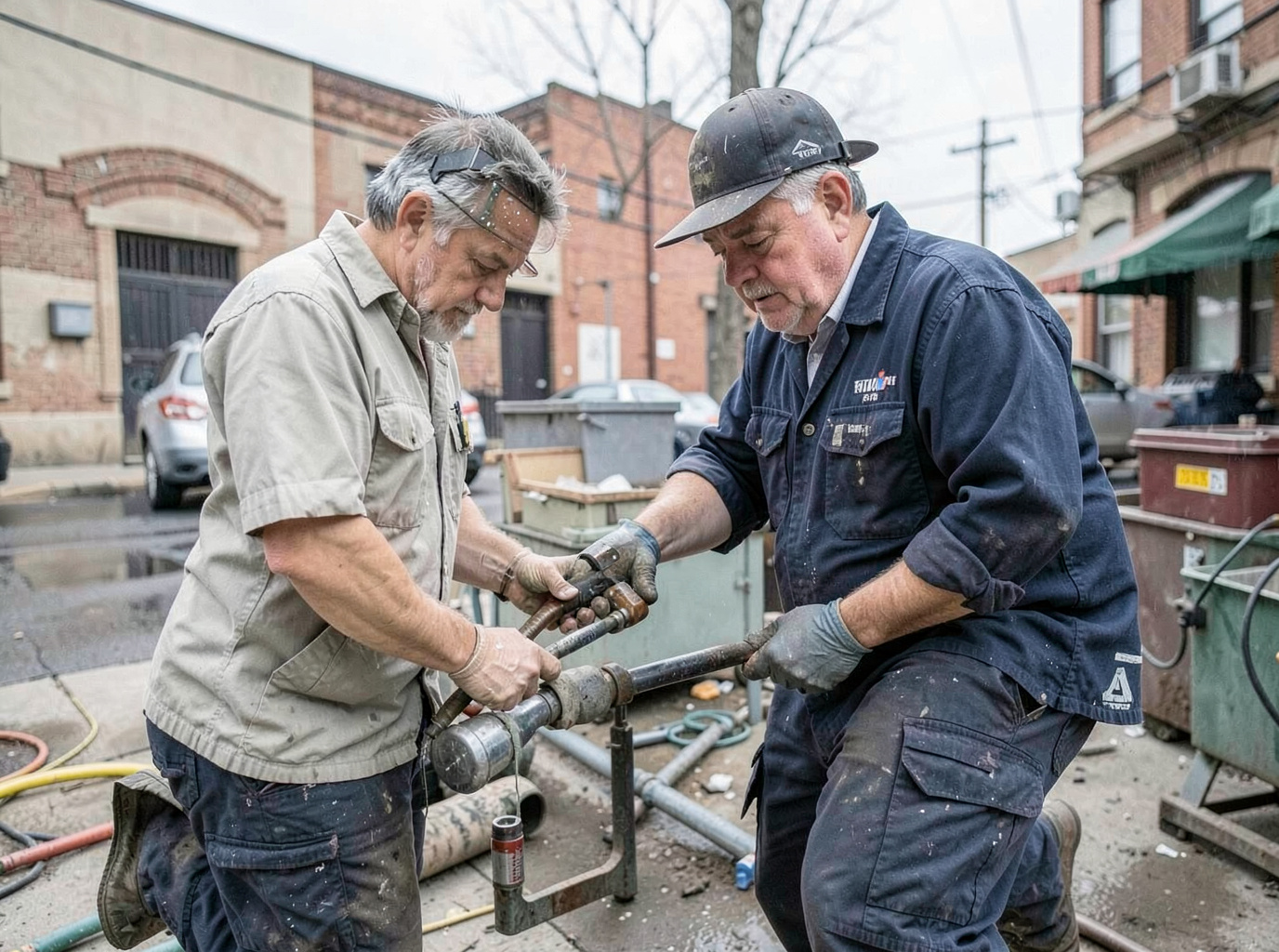
Detroit apartment buildings—from brick walk-ups in Midtown and Woodbridge to larger courtyard complexes near Eastern Market and Palmer Park—present a mix of cast-iron stacks, older copper, and later-era PVC branches. In Wayne County multifamily properties we commonly see original soil stacks tied into patched sewer lines and infilled floor drains under slab apartments. Those materials degrade differently: cast iron corrodes from the inside and weep at joints, while older copper can develop pinhole leaks at soldered tees. Planning repairs requires mapping stacks, checking slope in horizontal runs, and prioritizing fixes that prevent water migration into adjacent units and shared corridors.
Winter conditions in Detroit, with hard freezes and thaw cycles, change the job on the ground. Freezing temperatures and melting cycles can push groundwater and shift compacted soils around foundations—this raises sump pump demand and stresses below-slab drains. In buildings near Belle Isle Park or along low-lying areas by the river, higher seasonal water tables make backwater prevention and floor drain check valves essential. We factor seasonal pressure when installing pumps or replacing main building drain runs because a dry-season test can mislead; a spring thaw often reveals infiltration that only shows under sustained recharge.
Sewer line camera inspections are a routine part of apartment plumbing here, especially in neighborhoods with older infrastructure like Corktown, Boston-Edison, and Indian Village. A camera inspection locates roots crossing a lateral, identifies bellied sections where solids settle, and confirms connections for individual units before we negotiate repair scopes with property managers. For complexes near Comerica Park, Campus Martius Park, or the Motown Museum, municipal lateral connections to Wayne County sewers sometimes include historical tie-ins or offsets—camera footage is crucial to determine whether a lateral needs sectional replacement, point repair with cured-in-place lining, or a targeted excavation.
Code and tenant-safety notes: multifamily work in Detroit often triggers permit and inspection requirements at the city level for changes to main stacks, relief vents, or common-area boilers and hot-water recirculation. We advise property managers to submit plans for stack alterations or new sump installations because inspections catch improper venting, undersized relief piping, or missing backflow prevention devices. During service visits we provide written scope for code-triggering items and recommend phased repairs when tenant turnover schedules or winter weather make full closures impractical. Business hours are Monday–Friday 8am–6pm and Saturday 9am–2pm for scheduling site inspections and emergency triage.
Technician insight
In Detroit the thing that catches most property managers out with apartment plumbing is discovering cast-iron soil stacks hidden behind finishes that have multiple prior repairs. Those older stacks fail differently from PVC and often lead to repeated patching unless you replace a full run. Also, seasonal groundwater near Belle Isle and low-lying blocks by the river make sump design and redundancy essential—what looks fine in late summer can fail during a spring thaw.
Basement Sump Failure in Midtown Courtyard Building
Problem → A three-story Midtown courtyard building reported recurring basement flooding after heavy melts. What we found → an undersized sump basin with a single float and a bellied sanitary lateral filling during recharge. What we did → installed a duplex sump arrangement with high-water alarm, corrected inlet piping, and ran a camera inspection to locate and spot-repair the lateral belly. Outcome → the mechanical room remained dry through the following spring thaw and tenants reported no further basement intrusion.
Apartment Complex Plumbing Services We Offer
✓Main Stack Repair and Replacement
Assess and repair leaking or corroded soil stacks affecting multiple apartments; options include section replacement, rerouting, or access-port installations for future maintenance.
✓Sump Pump Installation
Design and install building sump systems for below-grade mechanical rooms and shared basements with attention to redundancy, float controls, and high-water alarms tailored to Detroit's freeze-thaw cycles.
✓Sewer Line Camera Inspections
Closed-circuit camera surveys of building laterals and common sewers to locate bellies, root intrusion, and failing joints before committing to excavation or lining.
✓Backwater Valve and Check Valve Installation
Install and service backwater prevention on building drains to reduce sewage backups during heavy rains and spring thaw events that raise local sewer pressure.
✓Floor Drain Tie-In and Repair
Repair, replace, or retie apartment and common-area floor drains to prevent standing water and ensure proper slope away from living spaces.
✓Hot-Water Recirculation and Domestic Piping Service
Troubleshoot multi-unit hot water distribution issues, repair header leaks, and optimize recirculation to reduce wait time and conserve energy for tenants.
✓Emergency Leak Response and Tenant Triage
Rapid response for active leaks affecting multiple units, including temporary containment, shutoff sequencing, and coordination with building managers to limit tenant disruption.
How it works
- 1
Schedule a Site Visit
We arrange an on-site inspection during business hours (Mon–Fri 8am–6pm, Sat 9am–2pm) to walk all affected areas, confirm materials, and note any mechanical-room constraints or tenant access issues.
- 2
Diagnostic Assessment
Perform camera inspections, pressure tests, and visual checks of stacks, traps, and sump basins to produce a prioritized repair plan that separates immediate risks from deferred maintenance.
- 3
Scope and Permit Guidance
Provide a written scope for repairs, indicate likely city permit needs for stack or sewer work, and outline phased scheduling to align with tenant move-outs or seasonal limitations.
- 4
Execution and Tenant Coordination
Perform the agreed work, protecting finishes and scheduling noisy phases for daytime hours; we leave common areas clean and document repairs for building records.
- 5
Follow-up and Seasonal Check
Offer a post-job walkthrough and recommend a seasonal check—especially after spring thaw—to confirm performance under higher groundwater conditions.
Pricing
Typical projects are priced per scope: diagnostic inspections billed upfront, then itemized labor and materials. Final cost varies with access difficulty, required excavation, and extent of cast-iron replacement.