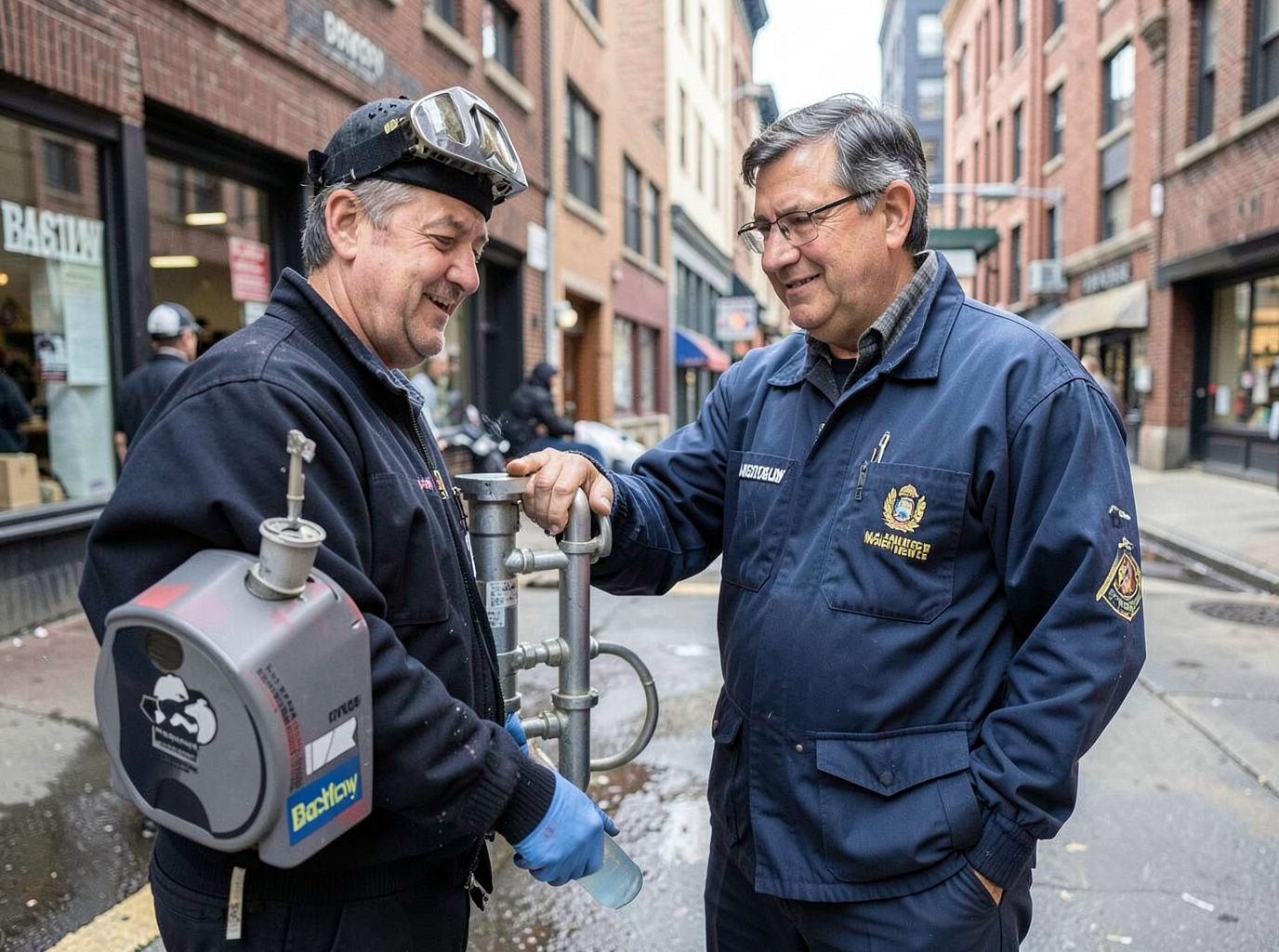
In Detroit, backflow and water-safety work needs to account for old service lines, mixed housing stock, and seasonal pressure swings. Many homes in Midtown, Boston-Edison, and Indian Village have aging copper and galvanized connections; Corktown and Mexicantown include brick row-houses with private irrigation or boiler connections that increase backflow risk. Cold winters and freeze-thaw cycles can create transient pressure changes that expose cross-connections at hose bibs, basements with boilers, or irrigation hookups. We inspect device placement, verify relief valves drain to frost-proof locations, and recommend materials—brass body reduced-pressure assemblies or double-check valves—based on the actual on-site piping and the degree of hazard.
Code and practical reality diverge in Wayne County properties. Municipal rules and inspectors around Commercial districts near Comerica Park, Ford Field, and Eastern Market can require certified test reports for reduced pressure principle assemblies, and accessibility for annual testing. Where a building has private fire lines or lawn-irrigation pumps (common in larger Woodbridge and Palmer Park lots), we assess whether a backflow preventer should be installed before those sources. We always highlight where a test port is corroded, where check springs are fouled by mineral scale from Detroit water, and where simple winterizing—draining test cocks and insulating above-grade piping—reduces call-backs.
Beyond the mechanical device, water safety is about eliminating cross-connection hazards inside the structure. In older apartments near Eastern Market and around Campus Martius Park, we routinely find washing machines or boiler feeds tied into non-potable loops without air gaps. My field crew documents each cross-connection with photos, recommends an appropriate assembly or an ASSE-style vacuum breaker, and explains the operational limits: pressure differentials, backpressure from booster pumps, and how a sump pump discharge should never tie into potable lines. We also provide straightforward notes for building inspectors in Dearborn or Hamtramck if follow-up permits or installation locations are required.
Technician insight
In Detroit, the thing that catches most people out with backflow and water safety is buried or hidden cross-connections in older homes—galvanized splices, boiler bypasses, or irrigation boosters—that only show up under pressure testing. The combination of aging housing stock and freeze-thaw winter cycles means we often replace corroded test cocks or move relief drains to avoid ice damage.
Replace corroded RP assembly on a Woodbridge lot
Problem: A homeowner near Woodbridge reported rusted components and intermittent city warnings after a pressure event. What we found: The reduced-pressure assembly had seized test cocks and relief piping angled toward a frost pocket, and a buried irrigation pump created occasional backpressure. What we did: We removed the failed assembly, relocated the relief drain above grade with insulation, installed a properly supported RP device, and added a check on the irrigation side. Outcome: The device passed performance testing and the owner received a complete report for the inspector and winterization notes.
Backflow and Water Safety Services We Offer
✓Backflow Preventer Installation
Assess hazard level, select a device (reduced-pressure or double check based on the site), and install with proper valves, support saddles, and frost protection for Detroit's winters.
✓Annual Backflow Testing
On-site performance testing of assemblies with written reports, including verification of test cocks and replacement recommendations when devices fail to meet seat or relief specs.
✓Backflow Repair and Parts Replacement
Repair leaking test ports, replace damaged springs and seats, and swap corroded test cock fittings commonly found on older Wayne County properties.
✓Cross-Connection Surveys
Complete walkthroughs to identify unsafe cross-connections—irrigation pumps, boiler loops, or hose bibs—and prioritized remediation plans for residential and commercial buildings.
✓Irrigation and Fire Line Protection
Install and maintain assemblies specific to lawn irrigation systems and private fire lines, including thermal protection and accessible test ports for annual inspection.
✓Winterization and Freeze Protection
Insulate above-grade piping, relocate or protect relief drains, and provide winter shut-off recommendations to avoid freeze damage to backflow preventers in Detroit's cold months.
✓Sewer Line Camera Pre-Inspection for Cross-Connections
Video inspections to detect illegal ties, stormwater cross-connections, or faulty lateral connections that create backflow or contamination risks before device placement.
How it works
- 1
Site Survey And Hazard Assessment
We begin with a walkthrough noting potable vs non-potable sources, boiler and irrigation connections, private pumps, and likely backpressure sources, and we photograph and map every suspected cross-connection.
- 2
Device Selection And Quotation
Based on hazard level and pipe layout, we propose the appropriate assembly (reduced-pressure, double-check, or air-gap solution), list required shutoffs and frost protection, and provide a clear, itemized quote.
- 3
Installation Or Repair
Work is scheduled during business hours; we perform the mechanical work, bench-test rebuilt components indoors when possible, and install protective supports and insulation to minimize winter failures.
- 4
Testing, Documentation, And Customer Orientation
After installation or repair we run a full performance test, deliver a test report with photos and maintenance notes, and show the owner how to cycle shutoffs and winterize relief drains.
Pricing
Typical installations vary widely by assembly type and accessibility; expect repair work to be significantly less than a full reduced-pressure assembly installation. Costs rise when digging, insulation, or rerouting piping is required.