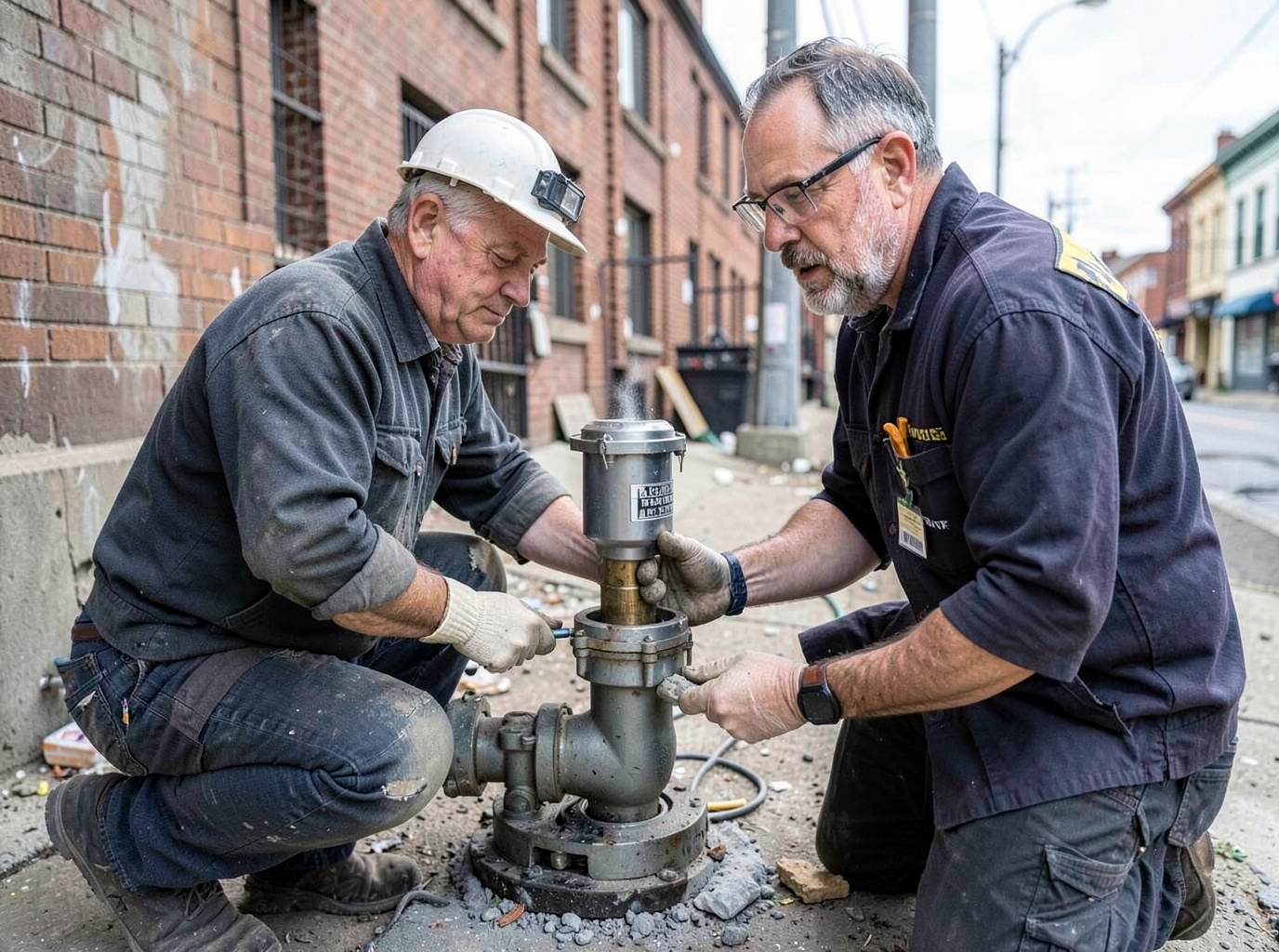
Backflow preventer installation is essential in Detroit where older housing stock in neighborhoods like Boston-Edison, Indian Village, and Woodbridge sits close to mixed commercial plumbing in Eastern Market and Midtown. We size and place assemblies to address local realities: many basements have shallow sewer mains, driveways that slope toward foundations in Palmer Park and Mexicantown, and properties with combined storm-and-sewer connections near Belle Isle Park and the riverfront. For multi-family row homes around Corktown and newer infill in Midtown, we consider limited pit space, valve access for winter maintenance, and freeze protection so the device remains functional through our cold, snowy winters and warm summers.
Materials and device selection matter here. For most Wayne County residential properties we recommend reduced pressure principle (RPZ) or double-check valve assemblies depending on the hazard classification of downstream fixtures and the degree of backpressure risk. In Detroit's mixed-use blocks by Comerica Park and Ford Field where irrigation systems and commercial boilers can create backpressure, we lean toward RPZs mounted above flood elevation with accessible test cocks. Bronze and stainless steel bodies resist corrosion when soil salts from winter treatment are present; we avoid plastic-only units in UV-exposed exterior pits. We also account for required test ports and pad clearances so city inspectors can perform annual testing without trenching.
Code, inspection, and shutoff considerations are part of every installation. Wayne County and Detroit plumbing officials have specific requirements about assembly location, orientation, and test-lab markings—assemblies must be accessible year-round and often cannot be installed below the low-point of a basement floor without additional approvals. If the property is in a historic district like Boston-Edison, we plan routing to minimize visible exterior changes. We always coordinate with the homeowner on shutoffs and temporary water service during replacement; in homes near Campus Martius Park or heavy commercial feeds around Eastern Market, we stage work to avoid disrupting business hours.
Practical winter warnings: installers and homeowners must plan for freeze protection. In Detroit’s sub-freezing snaps we enclose above-grade assemblies with insulation and heat trace or use heated enclosures where allowed. Where mains run deep or where sump pumps and sewer ejectors are present, we check for potential cross-connections with irrigation, boiler blowdown, and commercial equipment—these are common sources of contamination that backflow preventers must address. Our business is based in Detroit and we operate Mon–Fri 8am–6pm, Sat 9am–2pm to align with typical inspection windows and available test appointments.
Technician insight
In Detroit, the thing that catches most people out with backflow preventer installation is freezing and accessibility. Older homes in Boston-Edison and Indian Village often have shallow basements or exterior pits that fill with melting snow or street runoff, so if the device is left at grade it can be damaged or become inaccessible for the mandatory annual test. Planning for elevation or an insulated enclosure up front saves time, avoids failed tests, and prevents premature replacement.
Relocated RPZ for a Corktown Row House
Problem → A Corktown homeowner had an RPZ in a flooded exterior pit after heavy spring thaws. What we found → the pit filled from street runoff and the relief port was submerged, which risked contamination and prevented annual testing. What we did → we relocated the assembly to a raised, insulated enclosure inside a protected exterior alcove and rerouted piping to maintain slope and prevent air locks. Outcome → The device became accessible for Wayne County testing, eliminated the flood risk, and the owner avoided repeated repair calls during the next winter melt.
Backflow Preventer Installation Services We Offer
✓Residential RPZ Installation
Install reduced pressure principle backflow assemblies for homes with higher hazard connections—mounted and insulated for Detroit winters with accessible test ports for annual checks.
✓Double-Check Valve Assembly Installation
Fit double-check assemblies for lower hazard potable systems where allowable by code, positioned for easy testing in tight basements common to Corktown and Mexicantown homes.
✓Irrigation Backflow Prevention
Install and winterize irrigation-specific devices near Eastern Market and suburban Dearborn properties, including above-grade enclosures to prevent freeze damage.
✓Commercial Backflow Assemblies
Install larger commercial RPZs and double-checks for small businesses around Midtown, Comerica Park, and Ford Field, coordinating with building managers and inspection schedules.
✓Backflow Relocation and Accessibility Upgrades
Move assemblies out of flood-prone pits or inaccessible crawl spaces—common in older Indian Village and Boston-Edison homes—to locations inspectors can reach without excavation.
✓Annual Test Cock Preparation and Tagging
Prepare assemblies for municipal annual testing: clear access, replace worn test cocks, and add tagging and documentation compatible with Wayne County inspection records.
✓Emergency Bypass and Temporary Service Setup
Provide temporary bypasses and potable water routing during replacement in multi-family or commercial sites near Campus Martius Park to keep tenants and customers supplied.
How it works
- 1
Site assessment and hazard classification
We evaluate supply points, nearby cross-connections (irrigation, boilers, dental/commercial equipment), basement pit depth, and municipal access requirements to choose RPZ or double-check assembly and determine mounting height for freeze protection.
- 2
Proposal and shutoff plan
We provide a written scope showing device model options, where it will be mounted, how water will be isolated during work, and how long service interruption will last so customers in Midtown, Corktown, or Woodbridge can plan.
- 3
Installation and protection
We install the assembly, secure test ports, install insulation or a heated enclosure when needed, and relocate the device if required for inspection access—all while keeping the site tidy and minimizing disruption to adjacent businesses or neighbors.
- 4
Commissioning and documentation
After installation we commission the assembly, verify orientation and relief valve operation, provide test-tagging-ready documentation for Wayne County inspectors, and walk the homeowner through winter care and test scheduling.
Pricing
Typical installations vary by assembly type, location, and required piping work; expect higher costs if relocation, heated enclosures, or commercial-sized assemblies are needed.