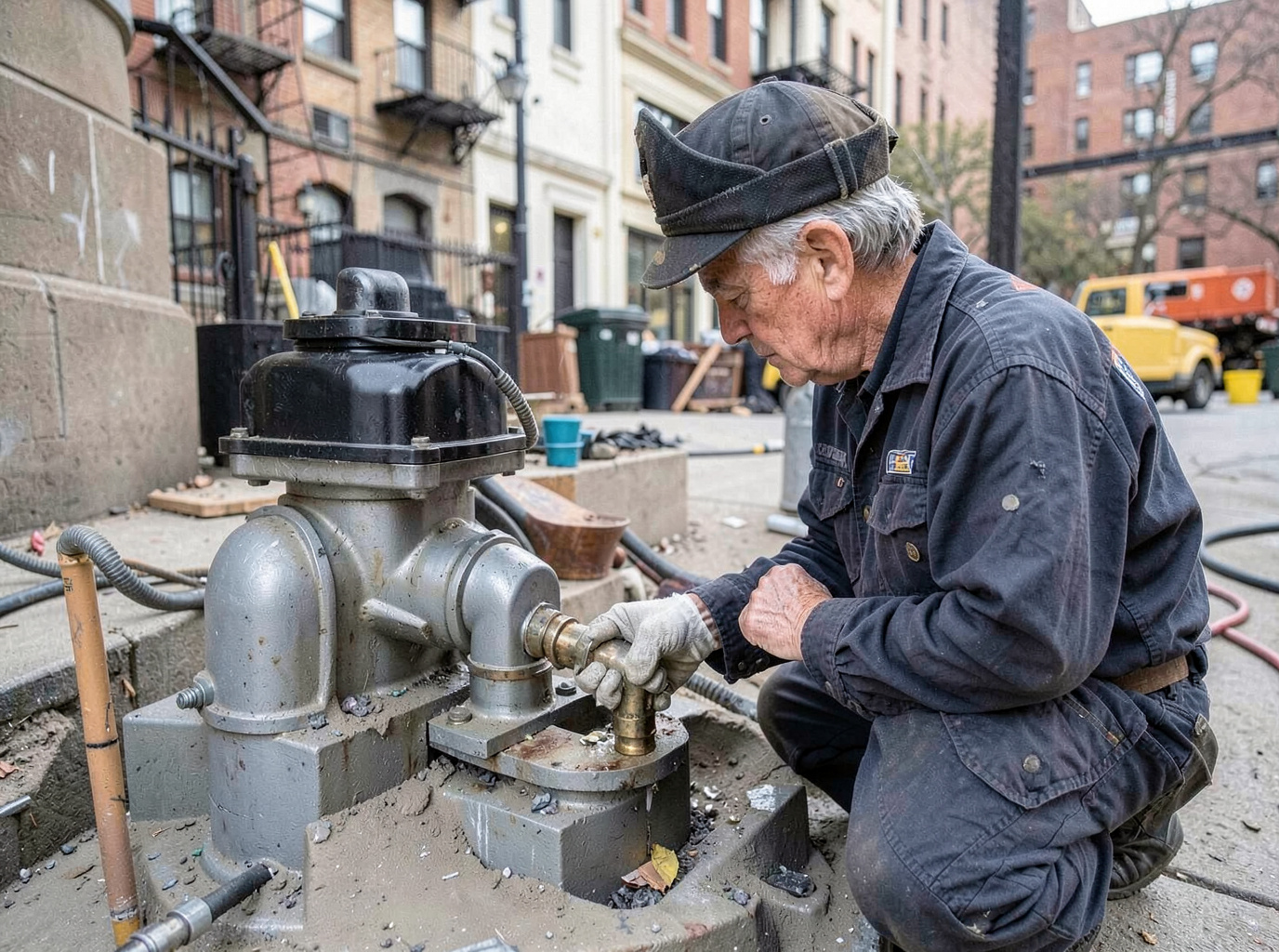
Backflow prevention installation in Detroit demands attention to older plumbing systems and seasonal storm conditions. Many homes in Midtown, Boston-Edison, Indian Village and Woodbridge were built before modern cross-connection rules and have mixed pipe materials; that means choosing the right assembly (double-check, reduced-pressure zone, or pressure vacuum breaker) and locating it so it’s protected from freezing in winter and accessible for annual testing. We routinely plan for cold Michigan winters and the spring thaw: insulating or moving exposed assemblies away from exterior walls or unheated basements helps prevent freeze damage that can render a device inoperable when you need it.
Commercial properties around Eastern Market and storefronts in Mexicantown and Corktown often require different solutions than a single-family basement in Palmer Park or Indian Village. Where irrigation, rooftop units, or boiler systems are connected, we look for cross-connection points and recommend assemblies sized to actual flow rates and backflow risk. Detroit’s municipal water mains and service laterals in Wayne County vary by neighborhood; on older blocks near the Detroit Institute of Arts and the Motown Museum we frequently encounter lead-era service transitions and tight crawl spaces that change mounting approach and valve spacing.
Code and inspection realities matter here. Detroit and Wayne County plumbing inspectors require accessible shutoffs and a measurable test cock orientation for approved backflow testers; installers must orient assemblies so licensed testers can perform annual inspections without removing drywall or navigating tight clearances. We avoid cutting corners that make future testing expensive or impossible — for example, never burying a reduced-pressure principle assembly without a proper pit and access cover when required. During heavy rains and combined sewer overflows common near Belle Isle Park and low-lying blocks, we also evaluate whether a backflow preventer for sewer or storm tie-ins is prudent as part of a broader mitigation plan.
Seasonal maintenance and homeowner prevention tips
Plan installation so the assembly is accessible year-round. In Detroit’s cold winters, a unit mounted on an exterior wall or in an unheated crawl must be insulated or installed within a heated interior wall. After a spring snowmelt or a heavy summer storm, check for any signs of water pooling around the assembly or softened soil that could shift piping. Keep the immediate area clear for annual testing: a 2–3 foot clearance in front of the test cocks and shutoff valves makes inspections faster and avoids additional excavation charges.
How backflow prevention differs from sump pump and sewer work
Backflow prevention stops contaminated water from entering potable plumbing; sump pumps move groundwater out of basements. In neighborhoods with high water tables or clogged drains—common in parts of Hamtramck-adjacent blocks and low-lying Dearborn-border areas—both systems can be part of the same remediation plan. When we encounter a property with frequent basement seepage, we coordinate backflow placement and sump pump discharge points so one system doesn’t undermine the other or create back-pressure conditions that compromise the device.
Technician insight
In Detroit, the thing that catches most people out with Backflow Prevention Installation is where older houses place service entrances and water heaters — many Boston-Edison and Indian Village homes have cramped basements or mixed pipe materials that force us to relocate the assembly indoors. Also, frequent freeze–thaw cycles mean a perfectly installed exterior unit can fail unless it’s insulated or moved during the initial job.
RPZ relocation for an Eastern Market café
Problem → Customer near Eastern Market had an RPZ mounted on an unheated alley wall that froze and leaked. What we found → the assembly had shifted on its supports and test cocks were inaccessible. What we did → we moved the RPZ into a heated utility closet, added a concrete pad and reoriented test cocks for easy access. Outcome → the café passed its Wayne County inspection and regained reliable protection without repeated freeze damage.
Backflow Prevention Installation Services We Offer
✓Residential Backflow Assembly Installation
Install and position the correct assembly type for houses in Midtown, Boston-Edison, Woodbridge and other Detroit neighborhoods, with freeze protection and easy test access for annual inspections.
✓Commercial Backflow Prevention Systems
Design and install assemblies for restaurants in Eastern Market, manufacturing tie-ins near Ford Field, or retail storefronts in Corktown, sized for higher flows and cross-connection risks.
✓Reduced-Pressure Principle (RPZ) Installations
Install RPZ valves where high health hazards exist—for example boilers or chemical feed lines—and ensure the assembly has the required clearances and drainage for Wayne County inspection.
✓Double Check Valve Assembly (DCVA) Installation
Fit DCVAs where the risk is lower but protection is still needed, such as irrigation systems or non-health hazard cross-connections, with proper orientation and shutoff placement.
✓Backflow Assembly Relocation and Freeze Protection
Move exposed outdoor or exterior-wall units to heated interiors or install insulated enclosures so backflow devices survive Detroit’s snowy winters and large temperature swings.
✓Post-Installation Test Cock Tuning and Accessibility Upgrades
Adjust test cock orientation, add concrete pads or access boxes, and ensure 2–3 foot clearance so certified testers can perform annual tests without invasive access work.
How it works
- 1
Site survey and risk assessment
We inspect the plumbing layout, identify cross-connections, locate potential freeze exposure, and check for nearby sump pump discharges or sewer tie-ins that affect device choice.
- 2
Assembly selection and placement
Choose the appropriate assembly type and size based on flow requirements and health hazard, then decide on interior vs. exterior mounting to reduce freeze risk and meet inspection access needs.
- 3
Installation and secure mounting
Install shutoffs, test cocks and the assembly with proper supports, slope and drainage; where needed we add insulated enclosures, concrete pads, or frost-proof mounting to prevent shifting.
- 4
Startup checks and owner orientation
We pressurize the assembly, perform functional checks, show the owner how to shut off and maintain clearance, and leave documentation to aid future annual testing.
Pricing
Typical installations vary widely by device type, accessibility, and whether relocation or freeze protection is required; expect higher costs for RPZ units, commercial systems, or assemblies requiring excavation or relocation.