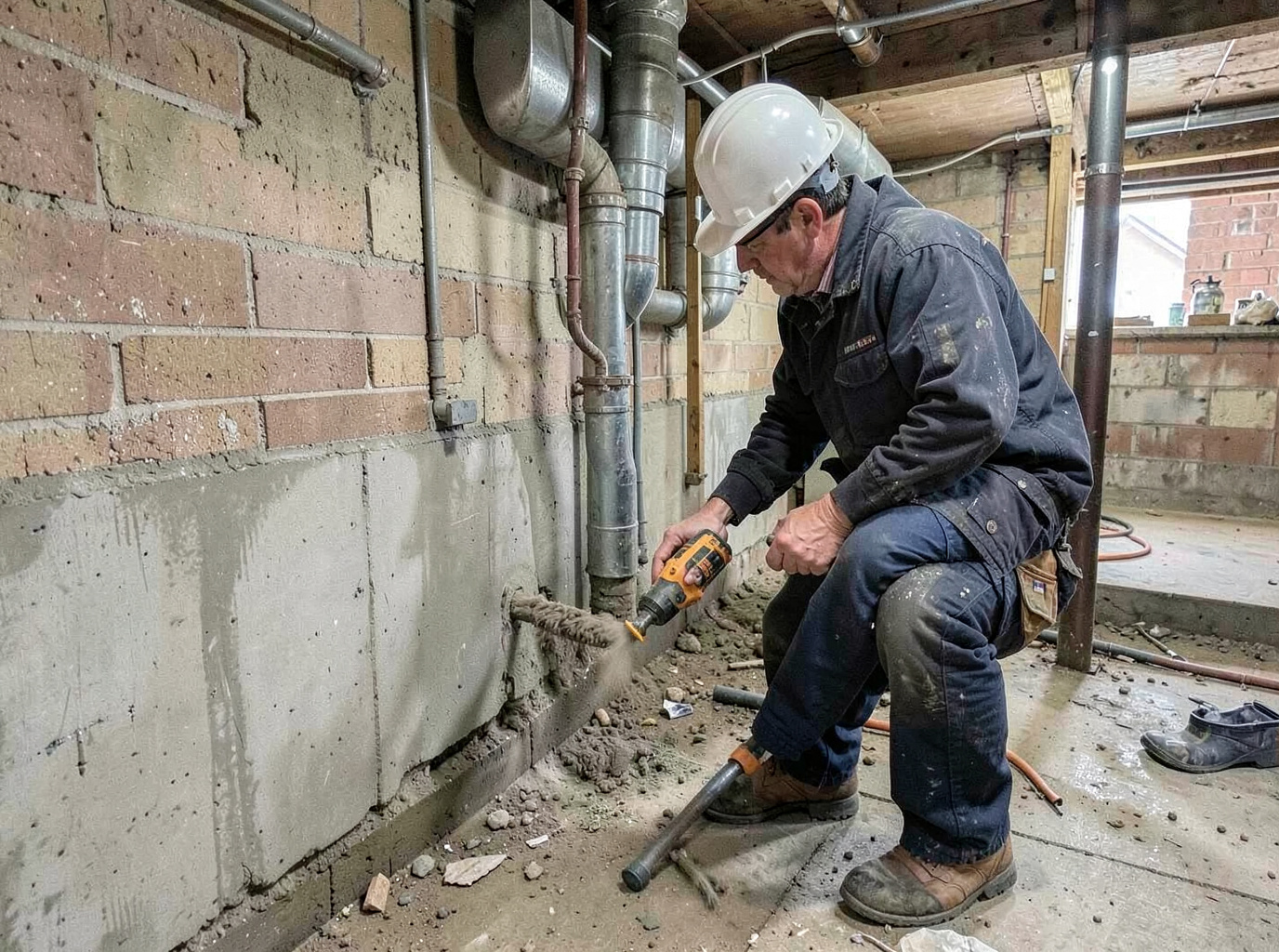
Basement waterproofing plumbing in Detroit requires work that recognizes the city's mix of prewar brick homes and mid-century builds in neighborhoods like Boston-Edison, Indian Village, Woodbridge, and parts of Midtown. Many basements were excavated when standards were different, and mortar joints, old clay drains, and shallow footings show up under peeling paint or efflorescence. We assess visible leaks and then physically open a small area to inspect foundation joints, sill plates, and original floor drains — brief invasive inspection gives the honest picture before recommending interior drain systems, exterior excavation, or targeted crack repairs. Because we operate from Detroit and keep shop hours Monday–Friday 8am–6pm, Saturday 9am–2pm, scheduling around workday deliveries and neighborhood parking restrictions is part of every estimate.
Detroit's four distinct seasons change how water behaves around foundations. Winters pack snow that melts rapidly during warm spells; spring thaw and heavy summer rainstorms both raise the water table near Belle Isle Park and riverfront streets, and low-lying blocks in Palmer Park or areas bordering the Rouge watershed can see extended saturation. That means we size sump pits and choose pump heads for both frequent shallow flows and occasional high-volume surges. We also consider soil: older Corktown parcels and properties near Eastern Market sometimes have compacted fill that directs runoff unpredictably. For many homes in Mexicantown and near Comerica Park, an interior perimeter drain tied into a modern sump with a high-water alarm is a cost-effective compromise when exterior excavation is impractical.
Materials and installation details matter in Wayne County climates. We use polypropylene and cast-iron sump basins where code and site conditions call for them, and prefer sealed, gasketed discharge passes through foundation walls to reduce freeze-back risk. Pit depth, check valve placement, and discharge routing must prevent re-entry into shallow sewer laterals — especially in neighborhoods with aging municipal lines. That’s where sewer line camera inspections come in: they confirm whether the existing footer drains still tie into a functioning lateral or whether broken clay tile or root intrusion is diverting water into the basement. If a private lateral is compromised, we provide clear options (internal bypass drain, lateral repair referral, or controlled redirection) rather than one-size-fits-all fixes.
Edge cases are common and require on-site judgment. In Boston-Edison and Indian Village, basements finished decades ago often conceal drywall and mechanicals that complicate interior trenching; in Hamtramck-adjacent blocks and near Dearborn borders, shared or shallow easements can limit exterior excavation. Work near major landmarks like the Detroit Institute of Arts or Campus Martius Park is not different technically, but proximity to high-traffic streets means we plan staging and obtain any required street permits in advance. We never promise certifications we don’t hold; instead, we offer transparent, written scopes, pictures of pre- and post-work conditions, and hands-on demonstrations of pump cycling so homeowners can inspect workmanship themselves.
Technician insight
In Detroit the thing that catches most people out with basement waterproofing is the city’s housing variety — older brick homes in Boston-Edison or Indian Village often hide compromised clay drains and altered floor levels, while infill homes near Eastern Market can have unpredictable fill that channels water. Inspecting the private lateral with a camera early usually saves homeowners from choosing the wrong fix.
Shoes soaking in a Midtown basement after spring thaw
Problem → A Midtown homeowner near the Detroit Institute of Arts reported recurring seepage after heavy melt. What we found → Camera inspection revealed a broken clay tile footer drain and a clogged exterior flap that sent meltwater under the slab. What we did → We installed an interior perimeter drain tied to a new sealed sump pit with a battery backup and coordinated a later referral for lateral repair. Outcome → The basement stopped collecting meltwater and the homeowner gained time to schedule the lateral repair without further interior damage.
Basement Waterproofing Plumbing Services We Offer
✓Interior Perimeter Drain Installation
Install a sub-floor French drain around the inside perimeter tied to a sump pump to capture water entering through mortar joints and hairline foundation cracks with minimal exterior excavation.
✓Sump Pump Replacement and Upgrade
Replace worn pedestal or submersible pumps with higher-capacity, frost-protected models and install battery backup and high-water alarms to prevent failure during winter freeze or power outages.
✓Exterior Trench and Waterproofing
Excavate to the footing where accessible to install exterior waterproof membrane and drain tiles — recommended for recurring seepage and where interior finishes must be preserved.
✓Sewer Line Camera Inspections
Video inspection of the private lateral and footing drains to identify broken clay tile, root intrusion, or collapsed pipes that can undermine basement waterproofing plans.
✓Crack Injection and Epoxy Sealing
Targeted epoxy or polyurethane injection for active or hairline cracks to stop active leaks before or during installation of interior drainage systems.
✓Battery Backup and Alarm Systems
Install battery backup units and audio/visual high-water alarms for sump pumps to protect against power loss during storms or winter outages common in Detroit winters.
✓Basement Drainage Evaluation and Maintenance
Comprehensive inspection and maintenance service including clearing discharge lines, testing float switches, and advising seasonal care for homes in Eastern Market and surrounding neighborhoods.
How it works
- 1
On-site diagnostic visit
We inspect the basement, exterior grade, and any visible discharge points, take photos, and perform a short sewer-line camera run if needed to determine where water is entering and whether the private lateral is intact.
- 2
Written scope and options
You get a clear, written estimate with several tailored options (interior drain, exterior excavation, or hybrid solutions), plus a note about staging, required permits, and expected disruption for your specific neighborhood and house type.
- 3
Installation and waterproofing
We perform the chosen work — interior trenching, sump pit install, pump hookup, or exterior membrane — keeping a clean worksite and documenting pre- and post-conditions for homeowner review.
- 4
Testing and homeowner walkthrough
Systems are tested through multiple cycles, discharge routing is verified for freeze protection, and we walk you through pump operation, alarm function, and recommended seasonal checks.
Pricing
Typical projects vary widely depending on access, the need for exterior excavation, and sewer camera findings; expect smaller interior-only fixes to cost substantially less than full exterior dig-and-membrane jobs.