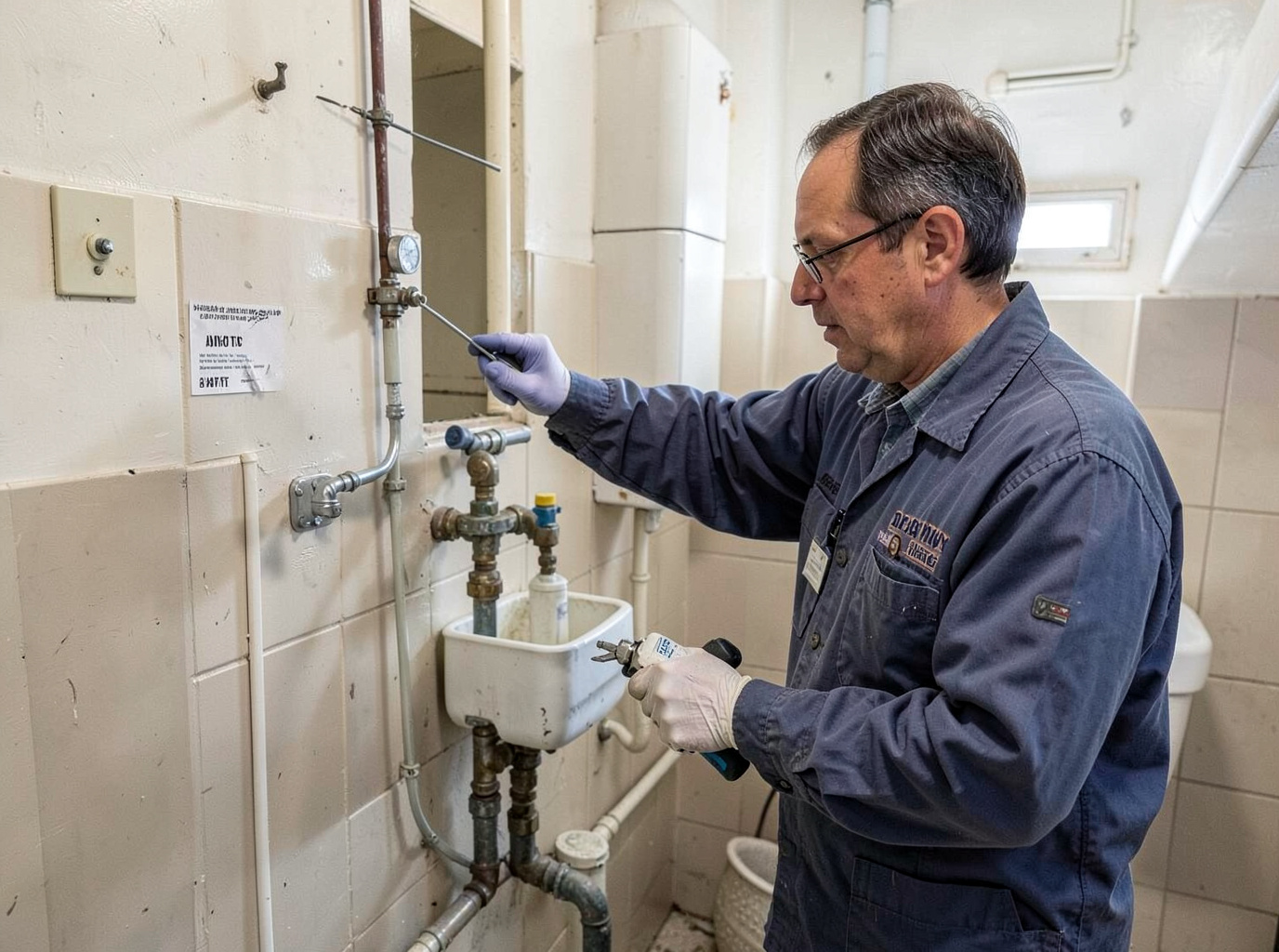
Bathroom plumbing inspection in Detroit requires more than a quick look under the sink. Homes in Boston-Edison, Indian Village and parts of Midtown often have older cast-iron or galvanized supply and waste lines that show corrosion, hairline cracks or mineral build-up; in newer construction pockets near Woodbridge or Palmer Park you’ll commonly see PVC and PEX with different failure modes like crushed trap arms or fittings that were improperly supported. I inspect visible piping, fixture shutoffs, tub/shower diverters, toilet seals, and the condition of floor and wall finishes to locate water intrusion. We also check vent stacks for blockages and proper slope because an unvented trap can mask a slow drain problem until it becomes a leak behind tile.
Seasonal weather in Wayne County — cold snowy winters and warm summers — changes how problems show up. Freeze-thaw cycles can split exposed trap arms in basement bathrooms, while heavy summer storms often reveal poor basement floor drains or undersized drain lines that surcharge and push water into shower pans. In areas near Belle Isle Park and the Detroit River where groundwater sits higher after spring thaw, bathroom sump issues and wet subfloors are more common; near Comerica Park and Campus Martius Park, many rowhouse-style buildings in Mexicantown and Corktown share old lateral stacks that affect multiple units. I examine floor slopes, backwater valves when present, and probe tile surrounds for soft spots to catch slow leaks before finishes fail.
Code and practical notes we use onsite: check vent riser height and termination above the roofline, confirm trap seal integrity, and look for anti-siphon protections on lavatory and tub installations. Detroit and surrounding cities like Dearborn and Hamtramck can have mixed plumbing histories—some properties were updated piecemeal—so I document what’s original versus what’s been replaced and point out where a retrofit could prevent recurring clogs or venting odors. Business hours are Mon–Fri 8am–6pm and Sat 9am–2pm; we're based in Detroit and schedule inspections to avoid heavy commute windows near Ford Field and Motown Museum events when possible.
Technician insight
In Detroit the thing that catches most homeowners out with bathroom inspections is hidden shared plumbing in older rowhouses—an upstairs leak can be originating from a neighbor’s line or a shared stack. Also, freeze-thaw damage to exposed trap arms in basements after a hard winter shows up as tiny leaks that are easy to miss without moisture scanning.
Slow Basement Shower Drain in Corktown Rowhouse
Problem → The homeowner complained of slow drainage and a musty smell in a basement shower. What we found → a partially collapsed lateral joint near the shared stack that caused recurring backups and tracked moisture under the tile. What we did → coordinated a sewer camera inspection, cleared the immediate obstruction to restore flow temporarily, and provided options for a targeted lateral repair and new flange installation. Outcome → drains cleared, odors eliminated, and the homeowner scheduled the lateral repair to prevent recurrence.
Bathroom Plumbing Inspection Services We Offer
✓Toilet Seal and Flange Inspection
Assess flange alignment, wax or rubber seals, closet bolts and floor integrity to catch leaks that cause subfloor rot or basement dampness. Includes dye test to reveal hidden seepage.
✓Shower/Tub Drain and Pan Check
Evaluate drain assembly, weep holes, and shower pan condition for slow leaks under tile or failing pans—especially important in older homes in Indian Village and Boston-Edison.
✓Lavatory Supply and Shutoff Assessment
Inspect supply lines, angle stops, hose bibs and faucet connections for corrosion, leaded solder issues, and proper valve operation to reduce sudden water damage risk.
✓Vent Stack and Airflow Testing
Verify vent continuity and airflow to prevent gurgling drains and sewer odors; check rooftop vent terminations and look for blockages from birds or ice in winter.
✓Tile, Grout and Subfloor Moisture Scan
Non-invasive moisture mapping under tile and around tubs to identify soft spots and mold risk before cosmetic repairs become large structural work.
✓Septic or Lateral Line Pre-Inspection
Pre-purchase-style inspection focused on bathroom performance tied to lateral sewer health, helpful for buildings near Eastern Market or older Midtown blocks with shared laterals.
✓Sewer Line Camera Coordination
When bathroom symptoms point to a deeper issue, we coordinate sewer line camera inspections to look for root intrusion, offset joints, or collapses that affect multiple fixtures.
How it works
- 1
Schedule & Pre-inspection Intake
We gather property details (neighborhood, age of building, basement or slab, recent plumbing work) and set an appointment within business hours. For multi-unit buildings in Corktown or Mexicantown we advise scheduling when tenants are available to access bathrooms.
- 2
Onsite Visual And Functional Assessment
We run sinks, tubs and toilets, inspect visible piping and fixtures, perform dye and airflow tests, and use moisture meters around suspected leak zones. If vents or stacks are suspect, we check rooftop terminations where safe access is available.
- 3
Targeted Diagnostics
If initial checks flag deeper issues we use focused tools: borescopes for behind vanity cavities, coordinated sewer camera runs for lateral concerns, and hydrostatic testing for trap and seal verification. We document findings with photos.
- 4
Review Findings & Action Plan
We review what we found with the homeowner, explain repair priorities, propose next-step options (repair, partial replacement, or monitoring), and provide written estimates for any recommended work.
Pricing
Inspections vary by complexity: a basic bathroom inspection is lower-cost, while jobs that require camera work, borescope access, moisture mapping or multi-bath documentation jump the scope. Expect separate estimates for camera runs and any repairs uncovered.