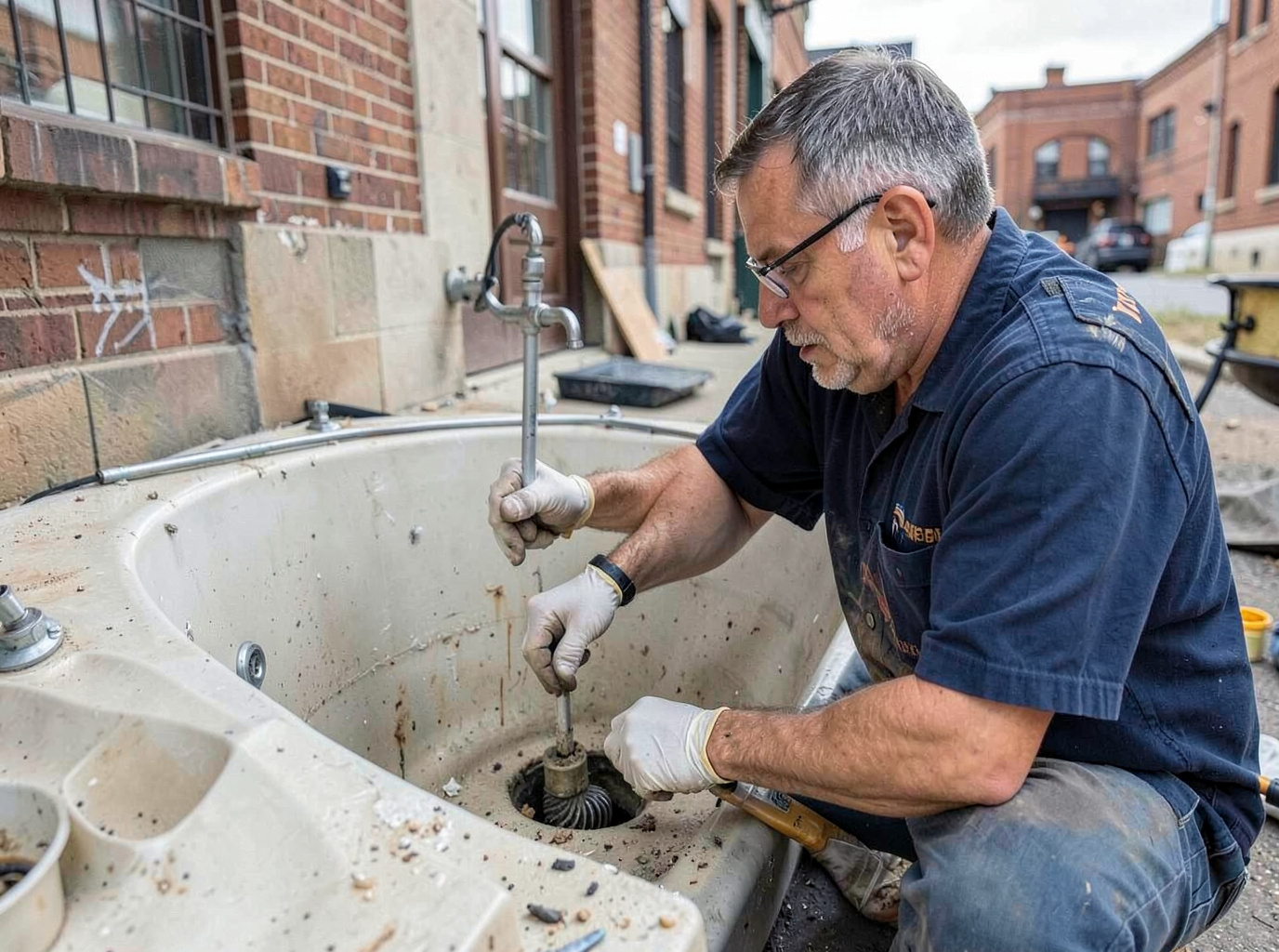
Bathtub drain repair in Detroit demands experience with century-old cast-iron lines in Boston-Edison and Woodbridge as well as the post-war copper and PVC transitions found in Indian Village and Palmer Park homes. Corrosion, hair and soap scum build-up, and failing pop-up assemblies are common, but so are deeper problems: tree-root intrusion from mature street maples around Mexicantown or offset traps on bungalows near Eastern Market. We diagnose what’s happening at the fixture and what that tells us about the branch drain, because a simple stopper swap can mask a failing trap seal or a partial blockage farther downstream that will worsen come spring thaw.
Materials and methods matter here. For surface repairs I match replacement parts to existing trim finishes — brass, nickel, or oil-rubbed bronze — and use slip-nut or threaded fittings consistent with the original install to avoid stress fractures in older drain bodies. For deeper repairs I inspect the P-trap, tailpiece, and the first cleanout; if the home connects to combined sewers near Belle Isle Park or lower-lying sections of Mexicantown, I pay special attention to backflow paths. Detroit’s four distinct seasons with freezing winters and wet springs mean freeze-thaw cycles and ground heave can shift trap alignment or loosen chrome bezels; I check alignment and test with standing water after repair.
Code and safety notes you’ll want upfront: bathtub drains must slope properly toward the trap and leave a serviceable cleanout accessible per Wayne County plumbing ordinances — long runs under slabs or tight space behind tile sometimes require removing access panels or working through an adjoining room. When tile or a cast-iron flange needs cutting, I protect finished surfaces and explain if a partial re-tile will be necessary. We operate Monday–Friday 8am–6pm and Saturday 9am–2pm from our Detroit base, and if a job in Midtown, Corktown, Dearborn border areas, or Hamtramck shows signs of deeper sanitary sewer issues I’ll recommend a sewer line camera inspection as the next diagnostic step.
Technician insight
In Detroit, the thing that catches most people out with bathtub drain repair is age-related material mismatch: a home in Indian Village will often have a mix of brass trim and older iron below, so replacing only the visible part without addressing a corroded tailpiece or loose trap nut leads to a repeat call. Freeze-thaw ground movement in Wayne County also shifts drains in slab or pier-and-beam houses, so I always re-check alignment after tightening.
Slow Drain In Corktown Bungalow
Problem → A homeowner in Corktown complained of a slowly draining tub that occasionally gurgled. What we found → The stopper linkage had seized and a partial obstruction sat in the tailpiece; the P-trap was corroded at the slip-nut. What we did → We replaced the linkage with matched-finish hardware, cleaned the tailpiece and removed the partial blockage, and swapped the trap for a new slip-fit assembly, resealing the flange. Outcome → Flow returned to normal and the gurgling stopped; we recommended a camera inspection if recurring backups appeared after heavy rains.
Bathtub Drain Repair Services We Offer
✓Pop-Up Stopper Replacement
Replace corroded or misaligned pop-up stoppers and linkages so the drain opens and seals reliably, matching trim finish and ensuring smooth operation.
✓Tailpiece and P-Trap Repair
Repair or replace damaged tailpieces and P-traps — common in older Boston-Edison and Woodbridge homes — to eliminate leaks and restore proper trap seal.
✓Blocked Drain Clearing
Mechanical snaking and hydro-flushing of bathtub branch lines to remove hair, soap scum, and minor root intrusion without damaging older piping.
✓Drain Flange and Tub-to-Drain Re-Seal
Replace corroded flanges, reset tub-to-drain seals with marine-grade or plumbing-grade sealants, and re-caulk tile surrounds to prevent future leaks into subfloors.
✓Overflow Assembly Repair
Fix or rebuild overflow plates and internal assemblies that fail to stop slow leaks or cause constant trickling into the trap.
✓Sewer Line Camera Inspection Referral
When we suspect a blockage beyond the branch drain — common near Comerica Park and low-lying Eastern Market corridors after heavy rains — we arrange camera inspections to locate mainline issues.
How it works
- 1
Initial Assessment
I start with a hands-on inspection of the tub, overflow, tailpiece and accessible trap, testing drain flow and checking for visible leaks or loose trim. If needed, I remove the stopper assembly to inspect the tailpiece and run a quick hand-snake to determine whether the issue is local.
- 2
Diagnosis And Recommendation
After assessing materials and access, I explain whether the repair will be a surface fix (stopper, linkage, flange reseal) or require deeper work (trap replacement, partial pipe repair, or mainline camera referral), and describe any tile or access work that may be necessary.
- 3
Repair And Test
I perform the repair using parts matched to existing finishes, re-seal and support joints to prevent stress from freeze-thaw, and run extended flow and leak tests before restoring trim and cleaning the work area.
- 4
Follow-Up Recommendations
I leave owners with maintenance tips, signs to watch for recurring backups, and a clear recommendation for sewer line camera inspections when branch issues indicate deeper problems toward Wayne County mains or combined sewer zones.
Pricing
Basic repairs like stopper or P-trap replacement typically cost less than jobs requiring flange removal, cast-iron cutting, or a sewer camera referral; price moves with access difficulty, material match, and whether tile or subfloor repair is needed.