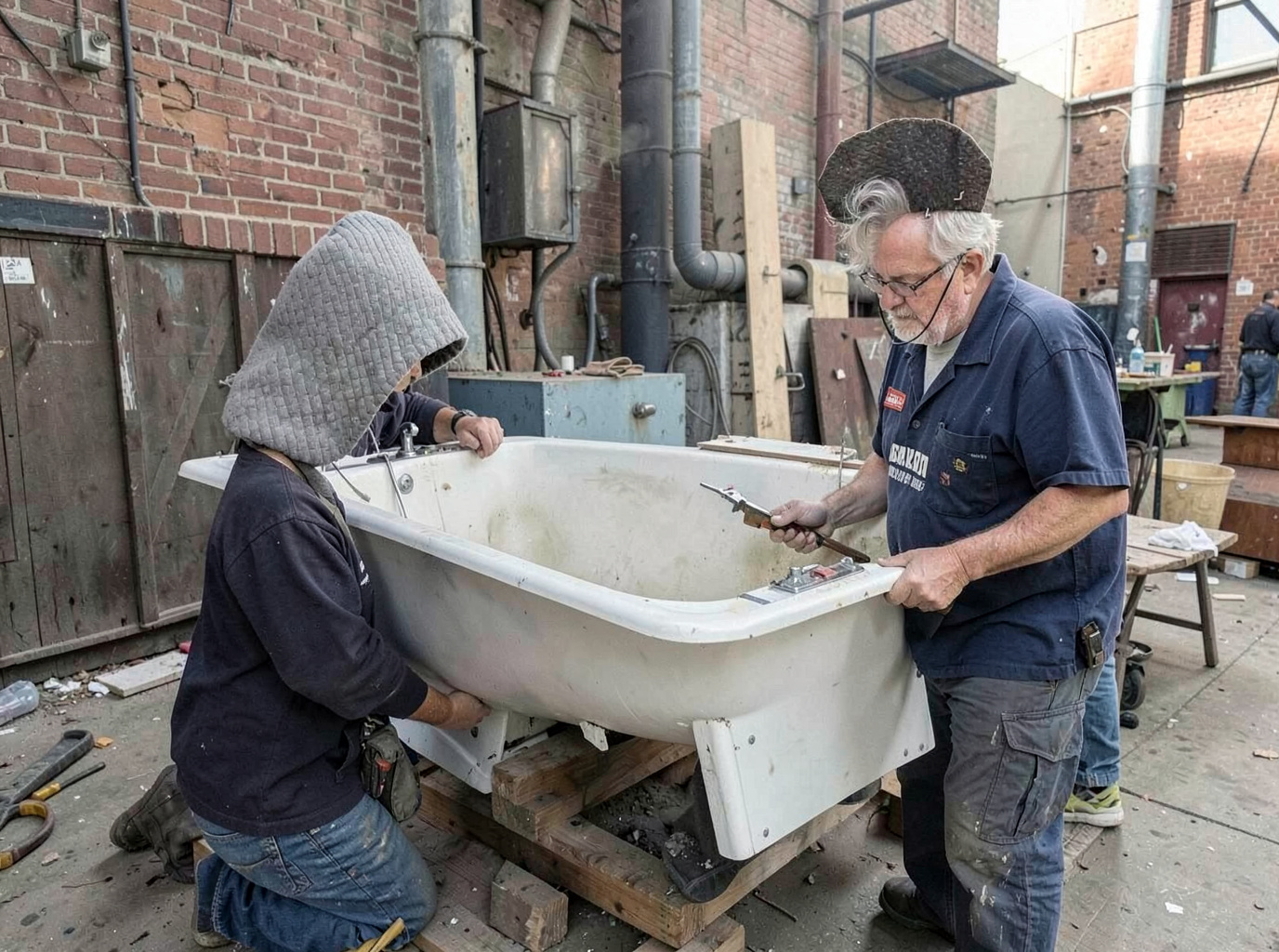
Installing a bathtub in Detroit means more than setting a fixture. Many homes in Midtown, Boston-Edison, Indian Village and Corktown were built early last century and still have plaster walls, narrow doorways, and original cast-iron drains. That affects how we handle demolition, transport, and drain connections. In older houses we routinely find offset drains, subfloor rot under old tubs, and walls that need new backing for tile. We plan for cutting narrow doorways, protecting original trim when requested, and using adjustable flange systems so new tubs mate with existing drain and waste stacks without chasing pipe multiple times.
Weather and the city's four distinct seasons change the job rhythm. Cold, snowy winters in Wayne County can complicate deliveries and require keeping stock inside — we avoid leaving acrylic or PVC parts exposed to freeze. In warm months we schedule tile and grout so they cure properly in Detroit’s humid summers. Groundwater and settlement issues are more common in low-lying pockets around Belle Isle Park and near older foundations, so for basement-adjacent bathrooms we check for signs of prior seepage and advise on waterproofing under tub surrounds. When a tub ties into a lateral sewer, we recommend pairing installation with a sewer line camera inspection to confirm the stack and lateral condition before finalizing the drain orientation.
Code and practical cautions you should expect: Detroit and Wayne County permit requirements may apply when relocating drains, changing clearances, or altering load-bearing walls for tub enclosures, so we check local permitting paths before work begins. Electric considerations—like relocating a GFCI-protected outlet or heater—are coordinated with the homeowner’s electrician; we do not perform electrical work but will locate obstacles and leave clear instructions. For shower-over-tub combos we install secondary drains and recommend appropriate backer board and waterproof membranes behind tile to prevent moisture intrusion common in older Detroit homes. We also advise homeowners in Mexicantown, Palmer Park, and Woodbridge about ventilation improvements to avoid long-term mold issues in tight historical bathrooms.
Technician insight
In Detroit the thing that catches most people out with bathtub installation is hidden subfloor rot under 100-year-old cast-iron tubs—especially in neighborhoods like Indian Village and Boston-Edison. Narrow doorways and offset drains also force us to plan for parts and routing ahead of demo; failing to do so means extra trips and delays.
Corktown small-bath tub swap with unexpected drain offset
Problem: A Corktown rowhouse needed a tub replacement but had a severely offset drain and plaster walls. What we found: during demo we discovered fractured subfloor and the drain offset that would not accept the new tub’s trap assembly. What we did: we opened the floor, repaired and sistered joists, installed an adjustable flange and rerouted the trap with minimal wall penetration, then completed a tiled surround. Outcome: homeowner got a level, leak-free tub and we avoided a full wall chase by using an adjustable waste solution.
Bathtub Installation Services We Offer
✓Cast-Iron Tub Removal and Replacement
Safe removal of heavy cast-iron tubs common in Boston-Edison and Indian Village with forklift-free methods, floor repair and new drain conversion to modern P-traps.
✓Acrylic and Fiberglass Tub Installation
Install lightweight acrylic or fiberglass alcove tubs for tight Corktown bathrooms, with proper blocking and shimming to prevent flexing and grout cracking.
✓Shower Over Tub Conversion
Convert existing bathtub setups into combined shower/tub assemblies with correct waterproofing, curb detailing and coordinated valve placement for Detroit code compliance.
✓Custom Tile Surround and Backer Installation
Install cement backer board, waterproof membranes and tile layout optimized for historic walls and uneven studs often found in Midtown and Woodbridge homes.
✓Drain Relocation and Waste Stack Ties
Reposition drains and tie into existing waste stacks with attention to offset conditions and advice to pair with sewer line camera inspections for lateral integrity.
✓Subfloor Repair and Reinforcement
Repair rotten or sagging subfloors revealed during removal and add blocking to support new tubs—critical in older structures near Belle Isle Park and along riverfront areas.
✓Accessible Bathtub Installations
Install walk-in tubs, lowered thresholds, and grab-bar-ready blocking to improve bathroom accessibility while maintaining local code clearances.
How it works
- 1
On-site assessment and measurements
We measure doorways, studs, drain locations, and check for hidden issues like plaster pockets or subfloor rot. If your drain ties into a main lateral we recommend a sewer line camera inspection before committing to a drain relocation.
- 2
Proposal and permit review
We provide an itemized quote that explains material choices and any recommended repairs. If a permit is needed for drain moves or structural changes, we outline the requirements so you can submit or we can advise on filing.
- 3
Removal and preparation
Old fixtures are removed with care to protect trim and adjacent finishes. Subfloors are inspected and repaired, studs reinforced and waterproofing installed where tile or new surrounds are planned.
- 4
Installation and tie-ins
We set the new tub with proper support, level and shim as required, make the drain/waste tie-in, and test for leaks. When requested, we run a sewer camera to confirm the waste stack condition before finalizing.
- 5
Finish work and final inspection
Tile, caulk and trim are completed, and we walk through the installation with you to point out maintenance items and ventilation considerations important in Detroit’s seasonal climate.
Pricing
Pricing varies by tub type, drain relocation need, and subfloor repairs. Expect entry-level acrylic installs to be the least expensive, while cast-iron removal, drain moves, tile surrounds, or required subfloor reinforcement add to the cost.