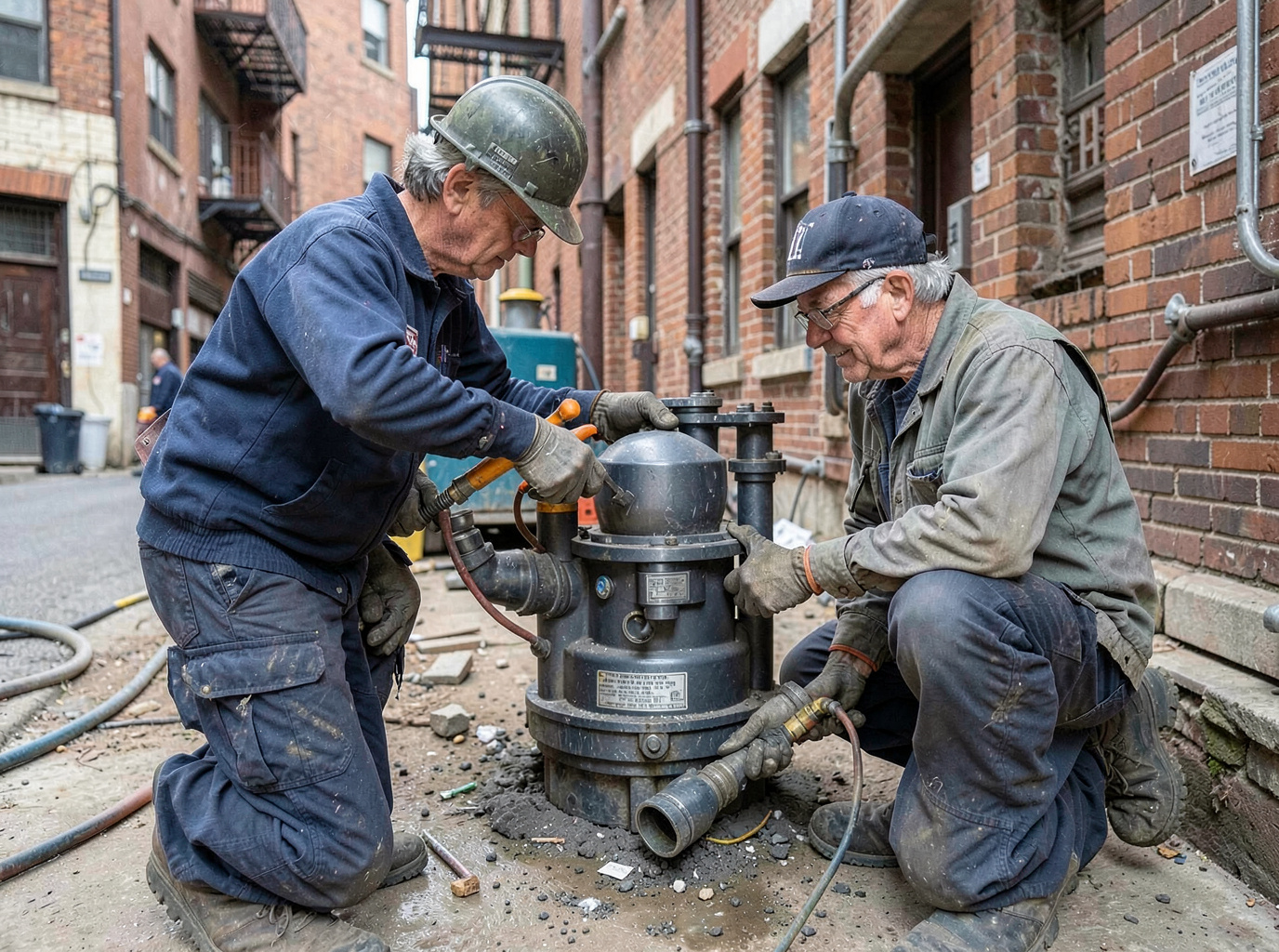
Detroit's older housing stock in neighborhoods like Boston-Edison and Indian Village often features fieldstone or early concrete foundations that sit close to the water table. Submersible units sit below the basin lid, which reduces noise and prevents the motor from freezing during the long cold snaps common in Wayne County. Proper discharge routing matters because many blocks still tie into combined sewers, and an incorrectly pitched line can send water right back into the basement during heavy spring thaws.
We size pumps to handle both the quick melt after a heavy snow event and the steady seepage that shows up in Mexicantown and Palmer Park after summer storms. A check valve and union are always installed so the pump can be swapped without cutting pipe. In homes near Eastern Market or Woodbridge, we also run a separate battery backup line because power outages during lake-effect snow are routine.
Terrain around Belle Isle and the riverfront creates higher groundwater pressure in spring. We set the float switch a few inches higher than the inlet to avoid short-cycling on the frequent small inflows these properties see. Every installation includes a sealed lid with a port for future camera inspection of the discharge line, which helps when homeowners later need Sewer Line Camera Inspections.
Discharge Line Routing in Historic Blocks
Many Corktown and Midtown row houses still have clay or cast-iron laterals that cannot accept high-volume discharge. We daylight the line to a storm basin or install a dedicated French drain stub when the lot allows it, avoiding the combined system where possible.
Technician insight
In Detroit, the thing that catches most people out with Submersible Sump Pump Installation is the clay-heavy soil and shallow foundations in neighborhoods like Corktown and Boston-Edison. After a big snow, meltwater sits against the walls for days and the cheap float switches that come on big-box units fail right when you need them. We always raise the switch a few inches and add a sealed lid so the pump does not short-cycle on the slow seepage that shows up every spring.
Corktown Row House After Heavy Melt
Water was entering a 1920s basement along the east wall after every thaw. The existing pedestal pump sat above the water line and the discharge ran into an old clay lateral. We installed a submersible unit on a new sealed lid, ran a dedicated 2-inch line to the alley storm basin, and added battery backup. The basement stayed dry through the next two snow events.
Submersible Sump Pump Installation Services We Offer
✓Battery Backup Integration
Adds a 12-volt backup system so the submersible pump keeps running during outages common after winter storms in Wayne County.
✓High-Capacity Pump Replacement
Swaps standard units for 1/2 HP or larger models that handle the rapid snowmelt runoff seen in Palmer Park and Eastern Market basements.
✓Discharge Line Rerouting
Replaces or redirects exterior discharge piping to prevent water from re-entering older foundations in Boston-Edison and Woodbridge.
✓Basin Lid and Check Valve Upgrade
Installs a sealed, radon-resistant lid and reliable check valve to stop backflow in homes near the riverfront and Dearborn border.
✓Sewer Line Camera Pre-Check
Uses camera inspection of the discharge path before installation to avoid conflicts with old laterals common in Hamtramck and Mexicantown.
How it works
- 1
Site Evaluation
We inspect the existing basin, foundation type, and discharge options in the specific Detroit neighborhood.
- 2
Pump And Basin Sizing
Select the correct submersible model and confirm basin depth will clear the water table during spring thaw.
- 3
Installation And Discharge
Set the pump, run new discharge piping, and install check valve and backup power if needed.
- 4
Testing And Handover
Cycle the pump multiple times, verify alarm function, and show the homeowner the sealed lid access.
Pricing
Pricing varies with pump size, backup power needs, and discharge routing difficulty in older Detroit blocks.