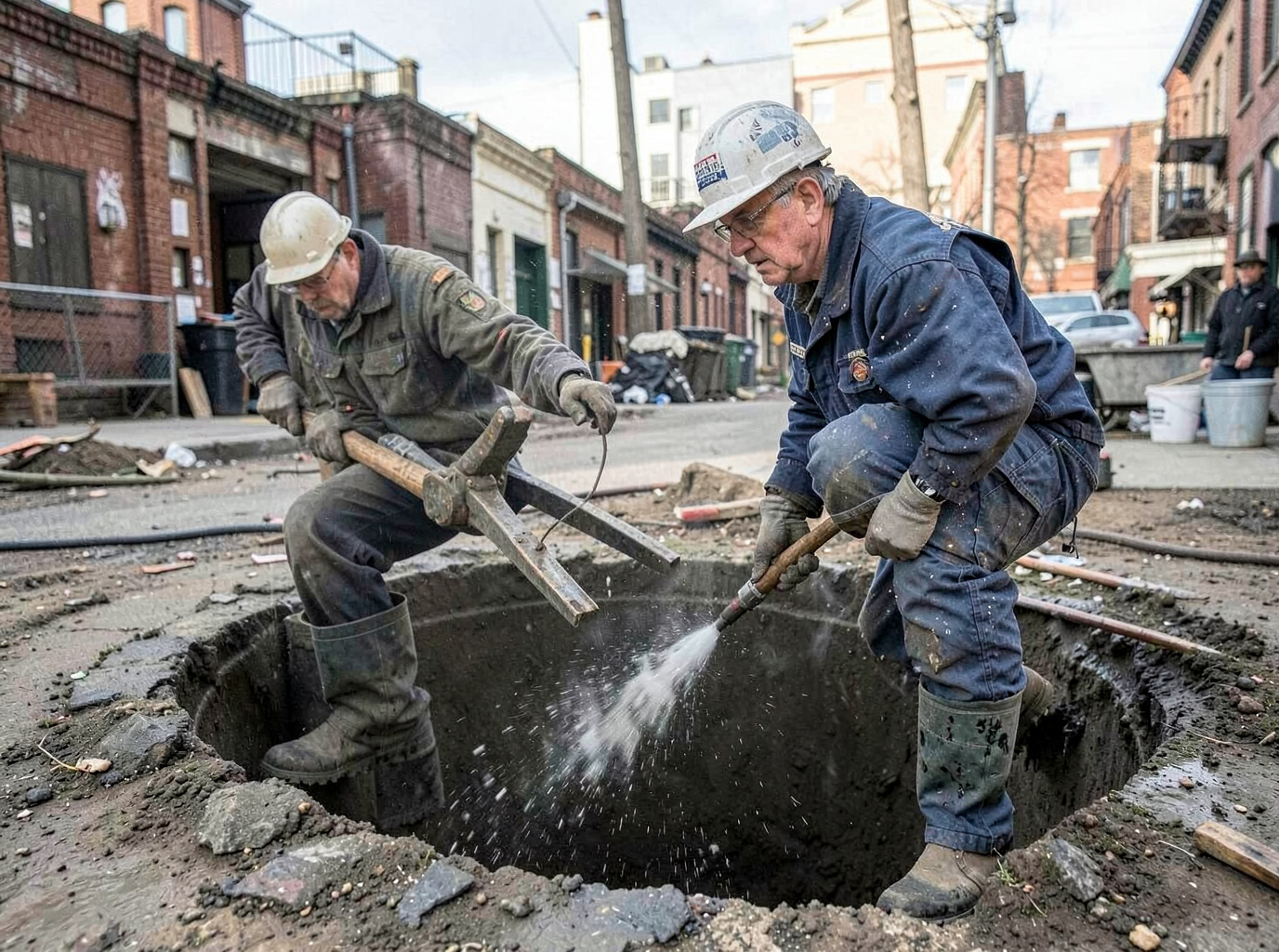
Detroit's older brick and frame homes in neighborhoods like Boston-Edison and Woodbridge often sit on clay-heavy soil that holds water longer after storms. Sump pits in these basements collect fine sediment, iron ochre, and construction debris from the original builds, which reduces pump efficiency and leads to float switch failures. Cleaning requires removing the pump first, vacuuming the pit to the gravel bed, and flushing the discharge line without disturbing the check valve or weeping tile connections common in Wayne County properties.
Four distinct seasons bring specific challenges. Snowmelt in March and April pushes high volumes through pits that froze solid in January, while summer humidity encourages bacterial growth on pit walls. Technicians check for hairline cracks in concrete pits and corrosion on metal liners before reassembly. Homes near Eastern Market and Mexicantown frequently show higher debris loads from nearby construction and alley runoff, requiring extra time to clear the intake screen and test the backup battery system.
Proper cleaning also includes verifying the pit cover seal and ensuring the discharge exits at least ten feet from the foundation to avoid re-entry during heavy Wayne County rains. Skipping the gravel rinse or failing to re-level the pump base can shorten equipment life in areas with shifting soils like Palmer Park and Indian Village.
Camera inspections of the discharge line to the street often reveal partial clogs from roots or old clay pipe sections still present in Corktown and Midtown blocks. Addressing these during the same visit prevents repeat service calls after the next thaw.
Technician insight
In Detroit the thing that catches most people out with sump pit cleaning is the clay soil around older homes in Boston-Edison and Woodbridge. It packs tight against the gravel bed so the pit never fully drains between cycles, letting iron bacteria build up fast. Homeowners often skip the annual rinse after the first snowy winter and then wonder why the pump short-cycles every spring thaw.
Corktown Backup After Thaw
Heavy March melt sent water into a 1920s home basement near Eastern Market. The pit was half full of ochre sludge that had locked the float switch. We removed the pump, vacuumed to the gravel, flushed the line running toward the street, and reinstalled everything. The system now cycles cleanly even after heavy afternoon storms.
Sump Pit Cleaning Services We Offer
✓Sediment and Debris Removal
Vacuum extraction of silt, ochre, and gravel fines from the pit bottom restores full pump capacity in older Detroit basements.
✓Pit Wall and Liner Inspection
Visual and tactile check for cracks, corrosion, and liner separation common in pre-1950 homes throughout Wayne County.
✓Discharge Line Flushing
High-pressure clearing of the outlet pipe to the curb prevents backups during spring snowmelt in neighborhoods like Midtown and Corktown.
✓Float Switch and Sensor Cleaning
Removal of buildup on mechanical and electronic switches ensures reliable activation when water rises after heavy rains.
✓Backup Battery System Test
Verification of battery backup operation critical during winter power outages in areas such as Indian Village and Boston-Edison.
✓Pit Cover Seal Replacement
Installation of airtight covers that reduce odor and keep debris out in humid Detroit summers.
How it works
- 1
Initial Assessment
Technician inspects pit location, pump model, and discharge route while noting any nearby sewer line issues common in older Wayne County blocks.
- 2
Pump Removal And Protection
Pump is disconnected and set aside on a clean surface to avoid damage during pit cleaning.
- 3
Pit Vacuuming And Rinse
Sediment is removed to the gravel layer, walls are rinsed, and debris is extracted without disturbing connected drain tiles.
- 4
Reassembly And Testing
Pump is reinstalled, float switch tested, and discharge line flushed to confirm flow to the street.
- 5
Final Walkthrough
Homeowner receives notes on any recommended follow-up work such as sewer camera inspection.
Pricing
Pricing depends on pit depth, sediment volume, and access constraints. Upfront quotes given after on-site assessment.